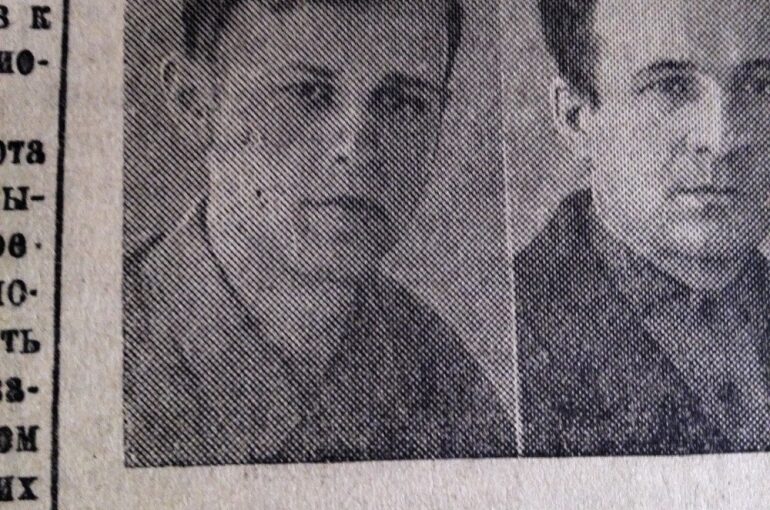
The recent exhibition including showpices connected with Andrei Sakharov is open in Ulyanovsk
Located on the Volga-river city of Ulyanovsk (a birthplace of Vladimir Lenin, the founder of the Soviet state), a local museum, mostly dedicated to Lenin, talks about its citizens fighting the Nazis during the Second world war. Sakharov, a freshly minted holder of an undergraduate physics degree, was dispatched to Ulyanovsk in the summer of 1942.
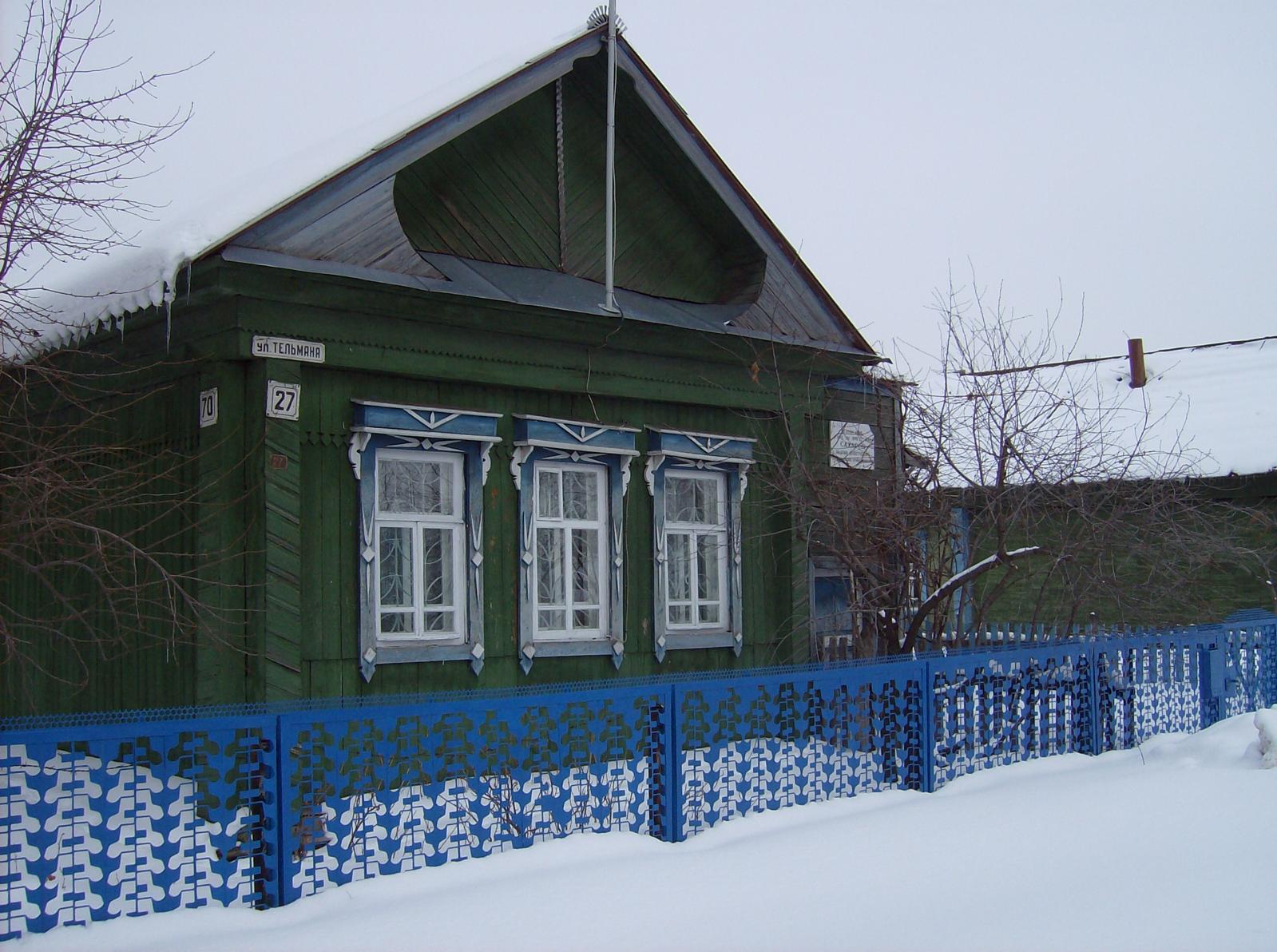
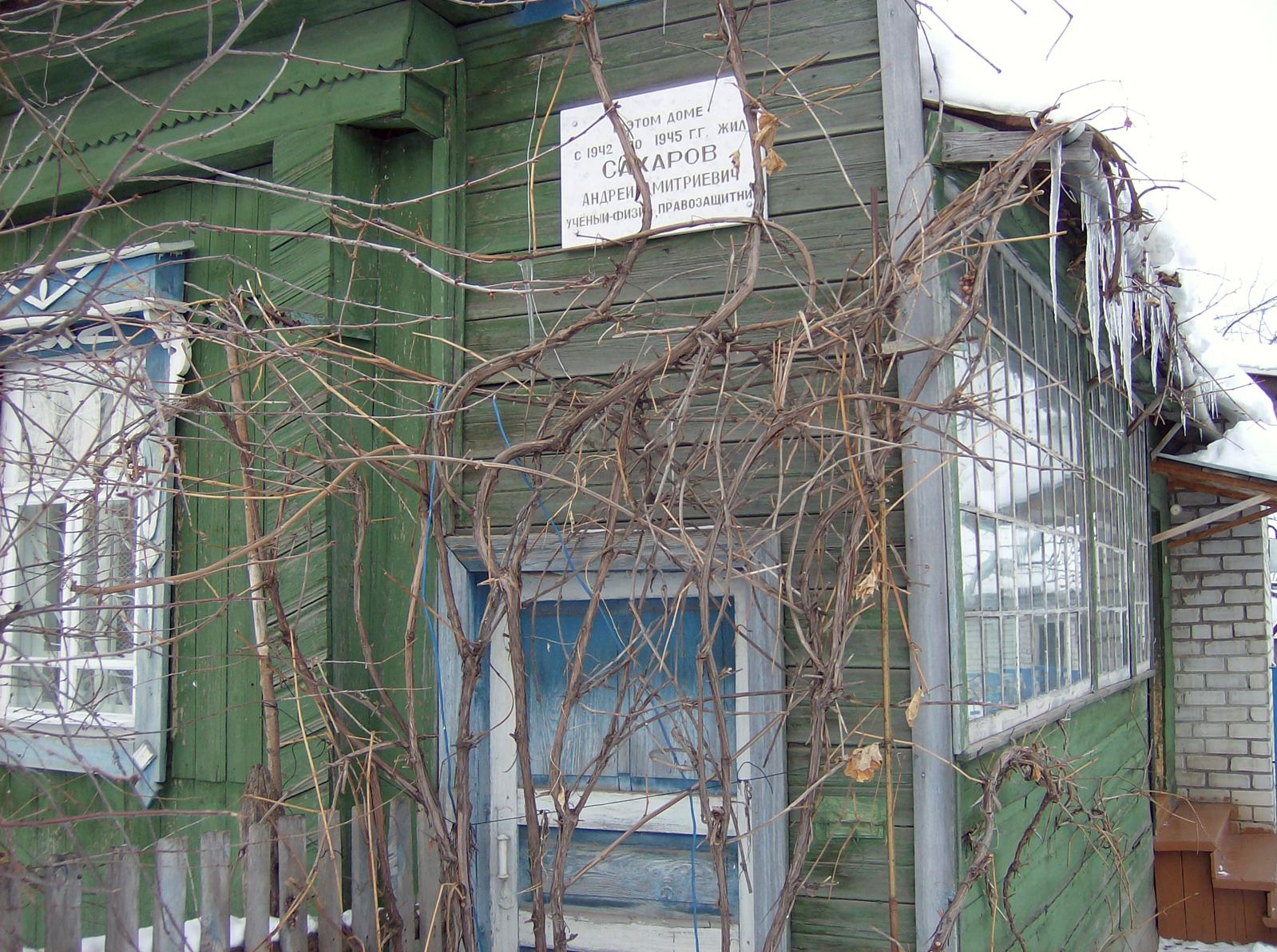
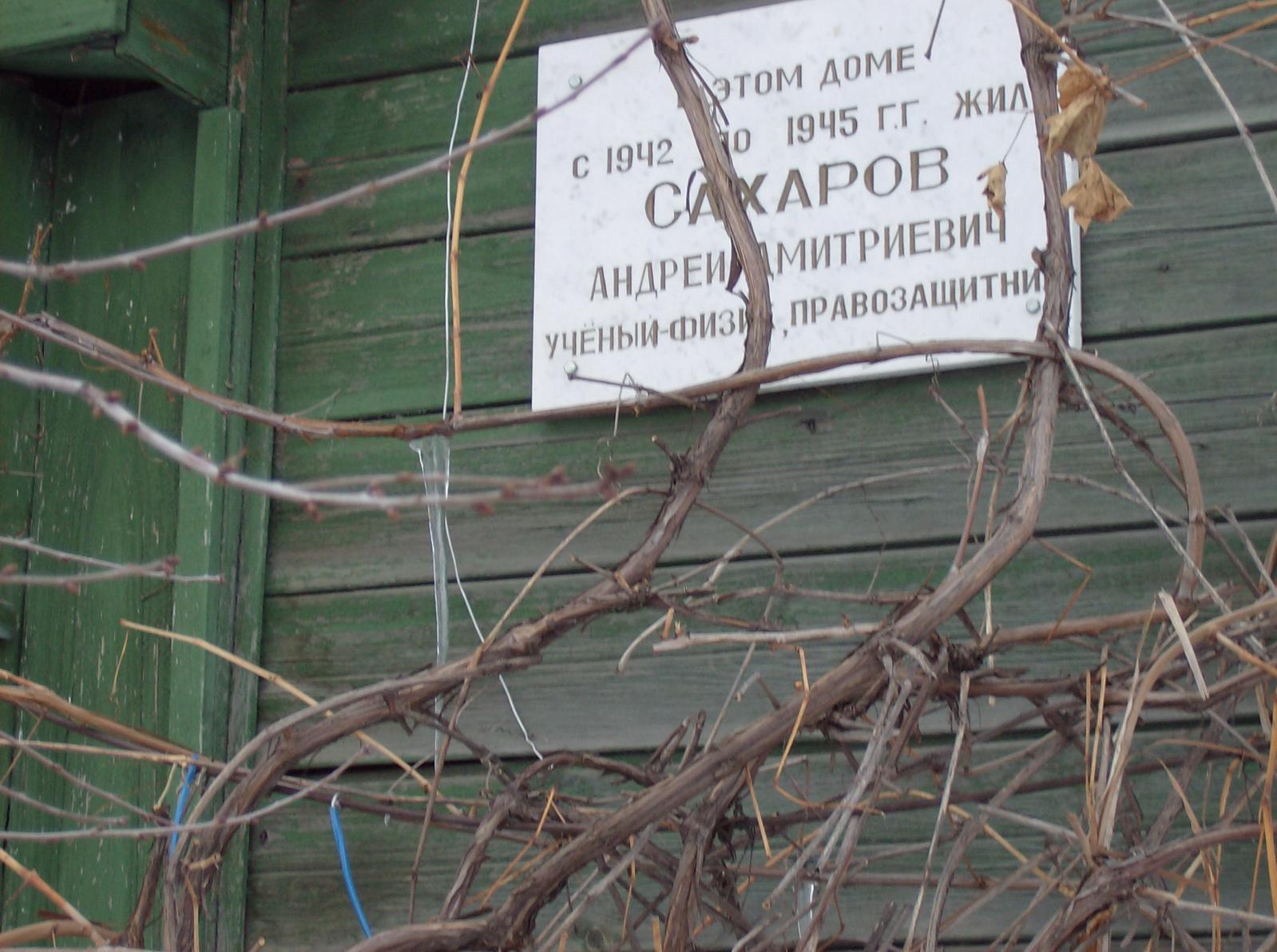
His work at Ulyanovsk Munitions Factory revealed his engineering acumen coupled with scientific genius. A 21-year old aspiring scientist then received his first patent for a novel method of testing the shells’ quality. In July 1943, Andrei Sakharov married Klavdia, a chemistry major who worked at the same factory, remaining in Ulyanovsk till January 1945. A house of his father-in-law bears a memorial plague in honor of Sakharov, while the museum’s exhibit proudly lists Sakharov’s scientific endeavours.
The recent exhibition including showpices connected with Andrei Sakharov is open until September 5:
https://73online.ru/r/o_saharove_na_volodarke_rasskazyvayut_na_vystavke_ulyanovskiy_tyl_frontu-149746
In July 1943, Andrei Sakharov and Klavdia Vikhireva got married, beginning their married life in a small house, belonging to Klavdia’s father, Alexey Vikhirev. Back then, the house was located in Zavolzhyie District of Ulyanovsk. Today, the house is at a different, more central location of the city: in the late 1950s Alexey had to take it apart and put together in a new place again as Zavolzhyie was to be flooded in the process of a hydropower plant’s construction.
The house is on the photos.
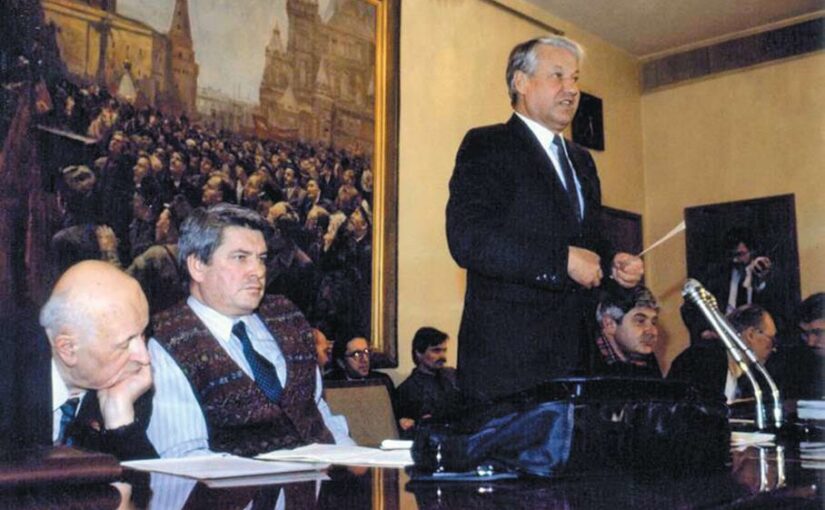
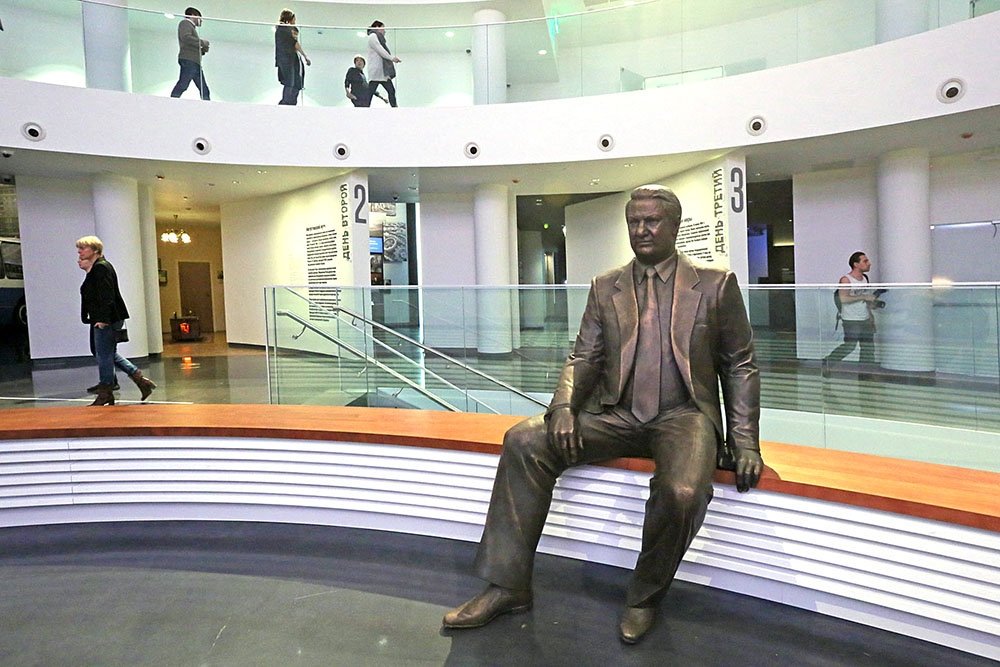
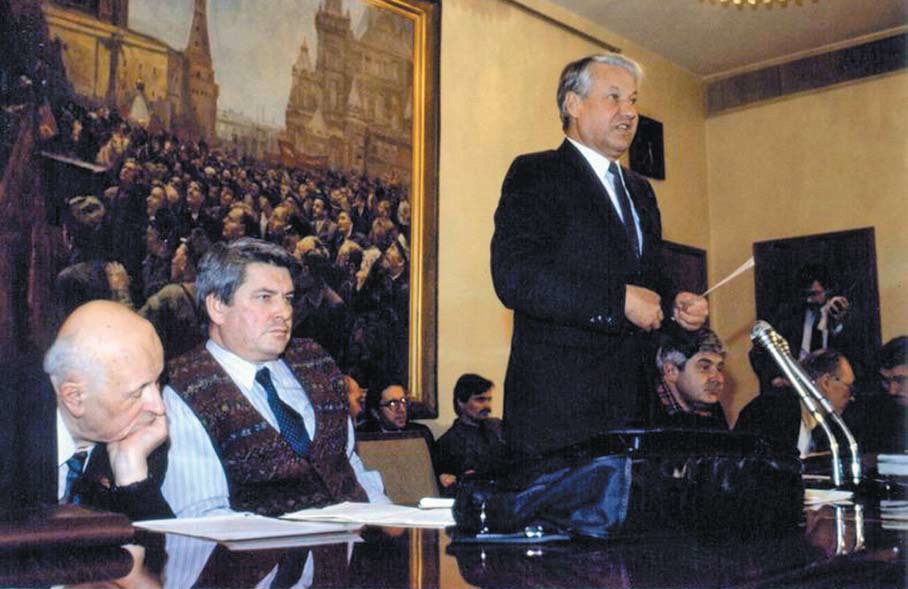
A new exhibition called ‘Petestroika-40’ in Yelzin Center in Yekaterinburg learns about Sakharov’s work alongside Yeltsin
Andrei Sakharov’s story is unique in that he started out as a Hero (thrice) of the Socialist Labor, decorated by all the highest state awards and admired by the USSR leadership for his incomparable contribution to the country’s nuclear shield – then, a few years later, he was drawing Khrushchev’s ire by his principled and incorrigible position on the nuclear safety. In Brezhnev’s epoch, Sakharov was branded a traitor, ultimately sent to an internal exile in the city of Gorky. President Gorbachev retrieved Sakharov from the exile, urging him to return to Moscow and “to his patriotic work.” Boris Yeltsin greatly admired Sakharov, finally paying his highest respect by walking, jointly with tens of thousands of Muscovites, behind his hearse through the frozen streets of Moscow in December 1989. From that time on, it seems that Sakharov maintains a position of a unique Russian historic figure in that he is equally revered in his home country and abroad.
As this blog mentioned, even amidst the hardening of the political line in Russia over the past few years, Sakharov remains a positive constant, inspiring new monuments (such as the one unveiled in Mayak building in Nizhny Novgorod in the summer of 2023, and inspiring new exhibits and publications.
Yelzin Center in Yekaterinburg is a unique project, talking about the life of Russia’s first president, Boris Yeltsin. A new exhibition called ‘Petestroika-40’ urges the viewer to re-visit the historic events of the 1990s. Within this exhibit, one learns about Sakharov’s work alongside Yeltsin, in particular, their fight to cancel the absolute grip of the CPSU on the political process in the country.
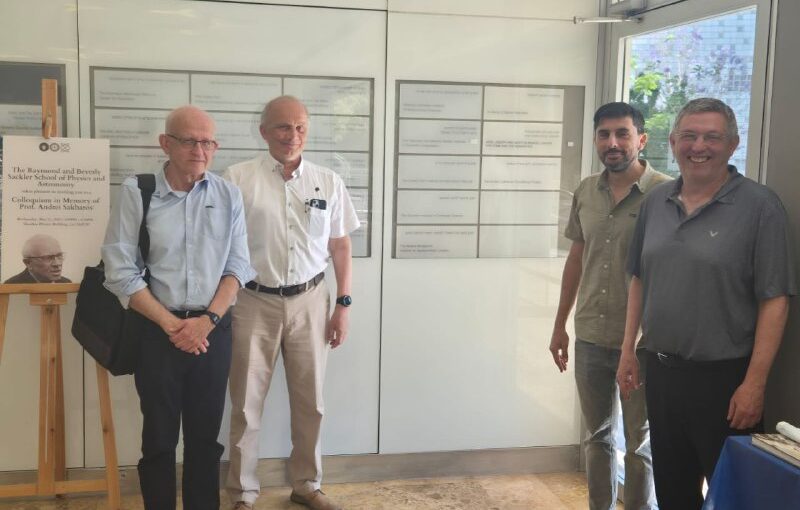
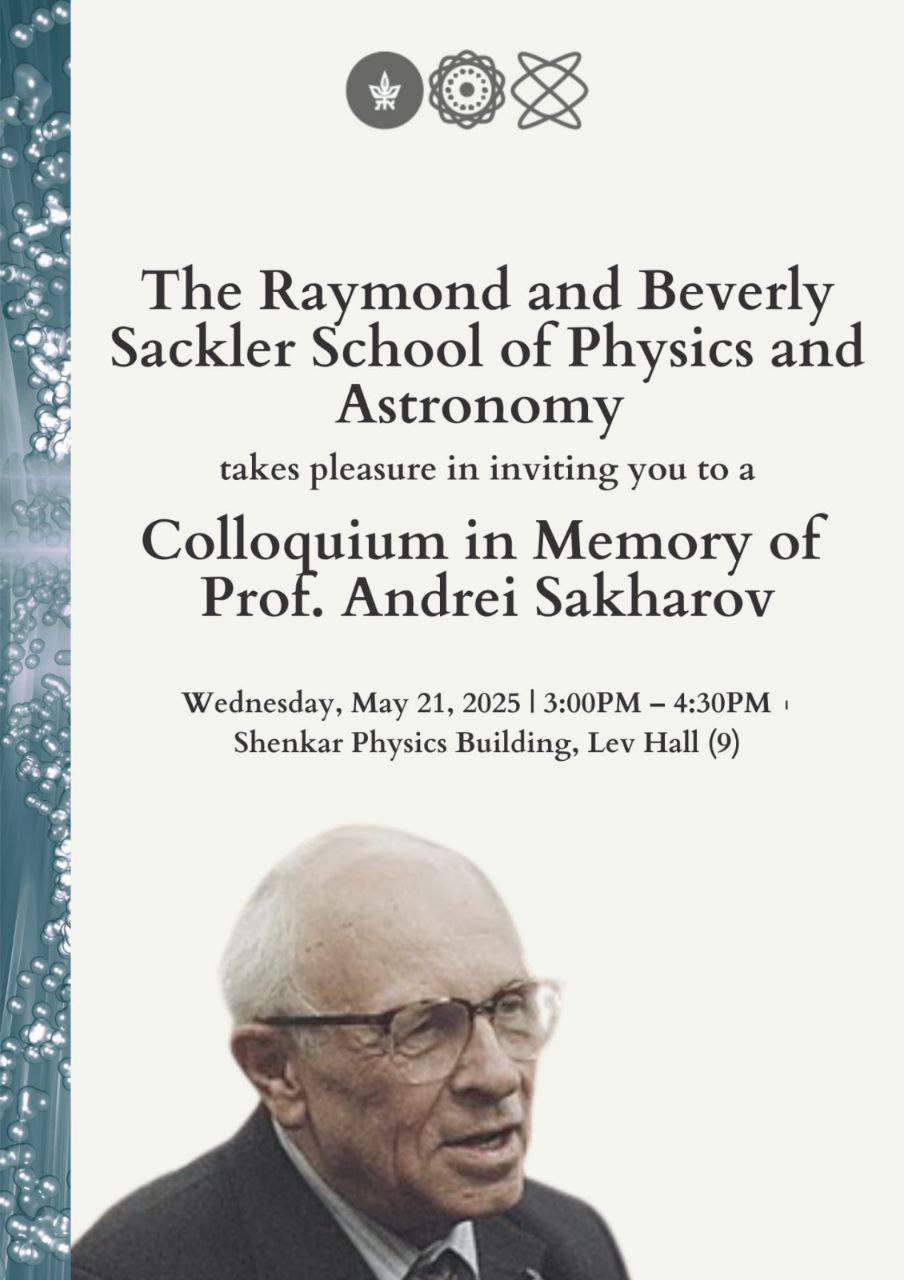
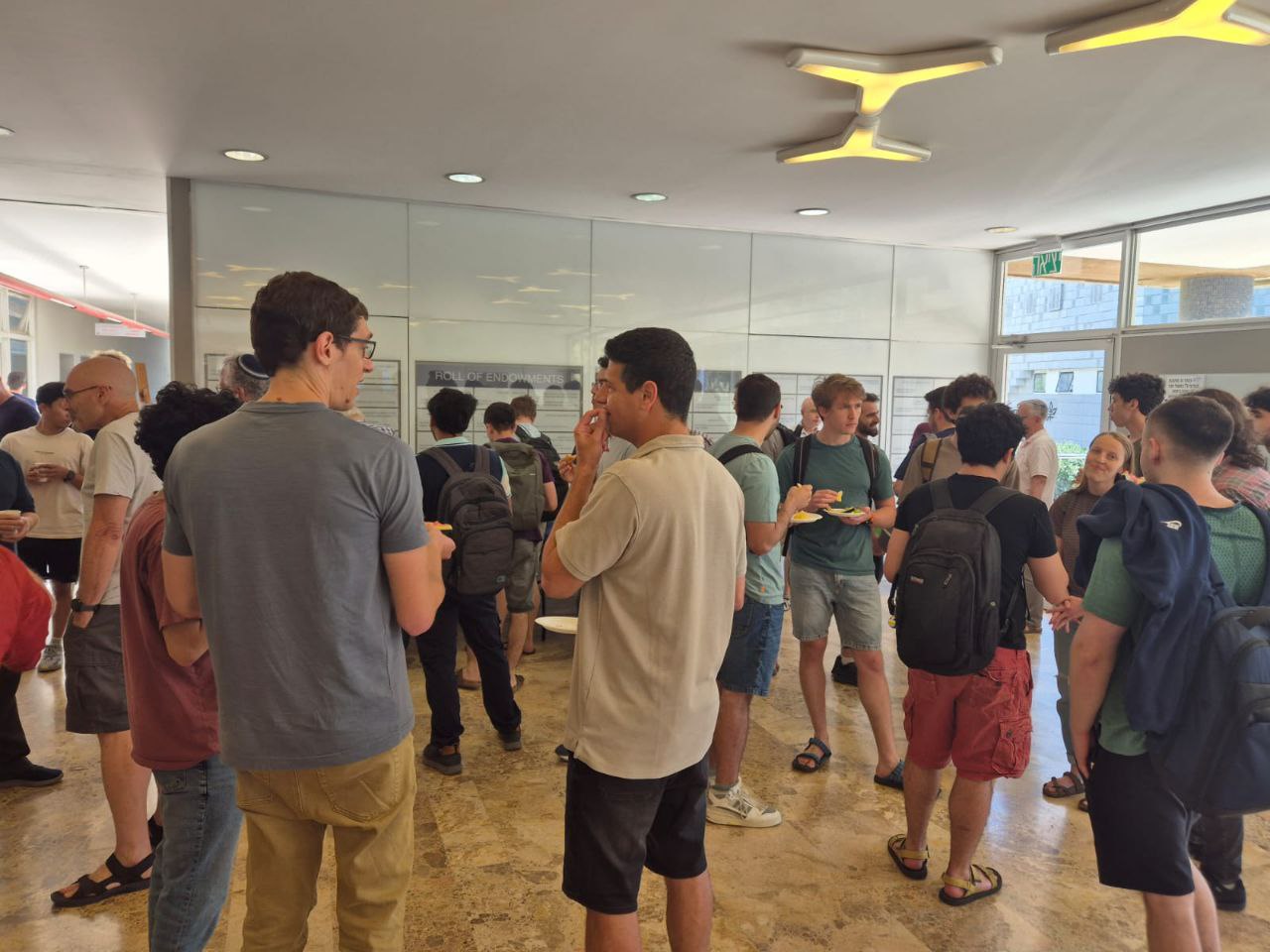
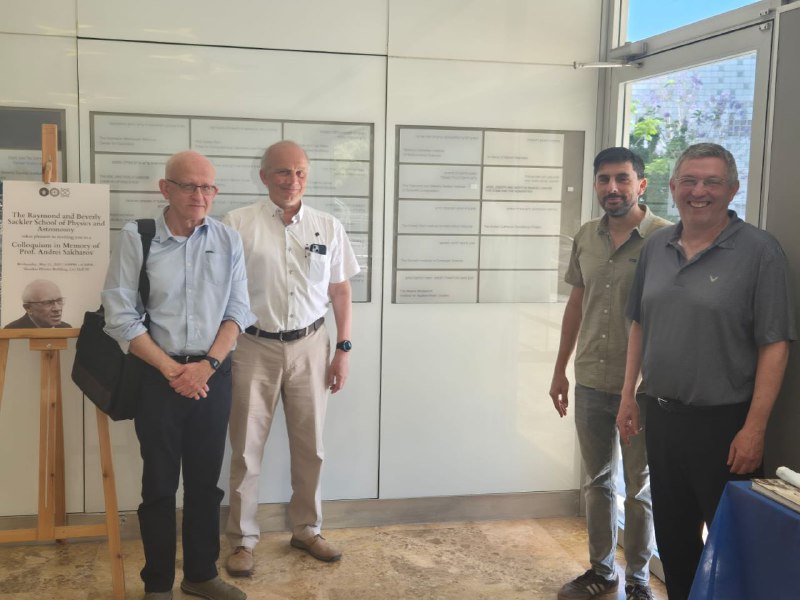
School of Physics and Astronomy at Tel Aviv University inaugurates Sakharov fellowship program on Sakharov’s birthday
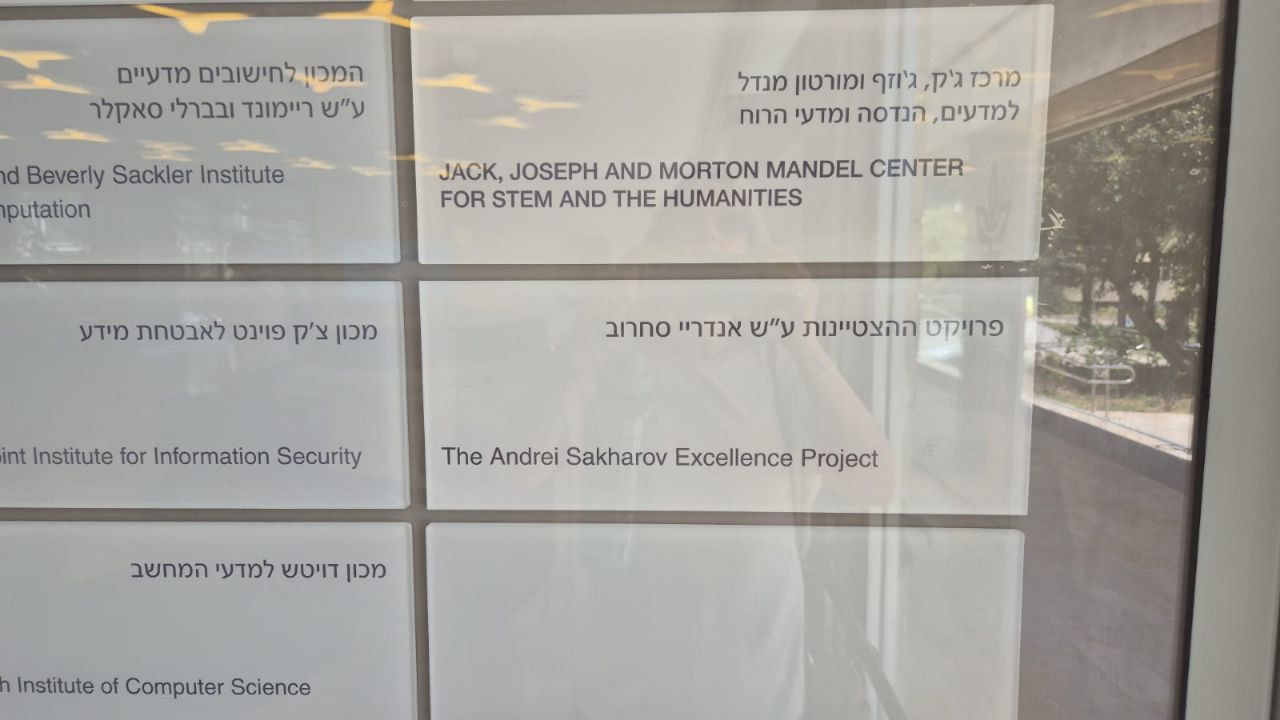
Through the initiative of the Andrei Sakharov Foundation, with enthusiastic support of the School of Physics and Astronomy and through generosity of our donors, the Andrei Sakharov Excellence in Physics was officially inaugurated. This year, twenty-five talented 3-rd year physics students received Sakharov awards, supporting their early scientific endeavors.
The School held a colloquium dedicated to Sakharov’s physics. Professor Leonid Gurvits, an astrophysicist from the Netherlands, delivered a poignant address to the full auditorium. A lecture by Professor Yuval Grossman of Cornell University provided great insights into the relevance of Sakharov’s scientific work, highlighting the breakthroughs in the new areas, which arose from Sakharov’s early work and which earned the scientists several Nobel prizes in the process.
In Israel a junction on the busy road entering Jerusalem bears his name, called Sakharov Gardens. There is also Andrei Sakharov Street in Haifa. A modest memorial in a small town of Bene Ayish, lists the names of nine righteous people, who include, among others, Andrei Sakharov, Raul Wallenberg and Oskar Schindler. Now, we are reminded of Sakharov’s legacy through the academic program at one of the leading universities of the world.
The ASF expresses hope that many talented students at TAU today will find relevance and inspiration in the legacy of Andrei Sakharov, a physicist who upheld the values of peaceful co-existence and intellectual freedom, which are as relevant as ever today.
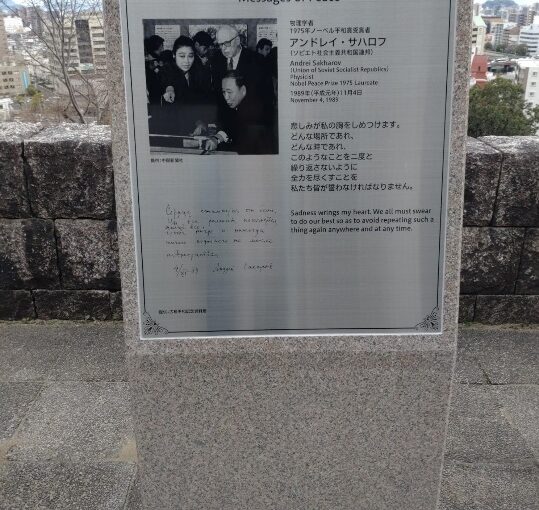
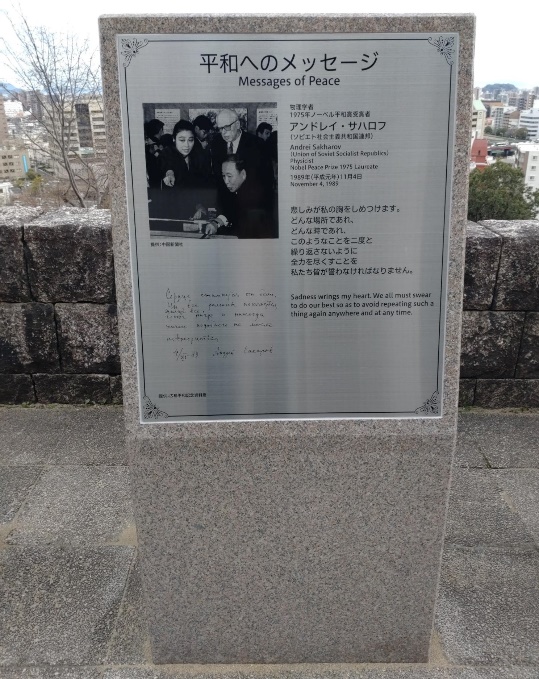
The stone monument with the message of peace by Dr. Andrei Sakharov was installed at the Fujimidai Observatory Deck in Hijiyama Park
This year marks the 80th anniversary since the nuclear weapons were used in the war for the first — and one ardently hopes — the last time in the history.
In August 1945, Sakharov learned from a newspaper about the American bombing of Hiroshima and Nagasaki. He vividly described his horror at the news, while realizing that the world — and his life — had irreversibly changed. Sakharov, with his rarest combination of theoretical brilliance and engineering acumen, was subsequently drawn into the work on the Soviet thermonuclear weapons. His contribution was so significant that it earned him a moniker “Father of the Soviet Hydrogen Bomb.” Yet, Sakharov’s contribution to nuclear safety and peace is more enduring.
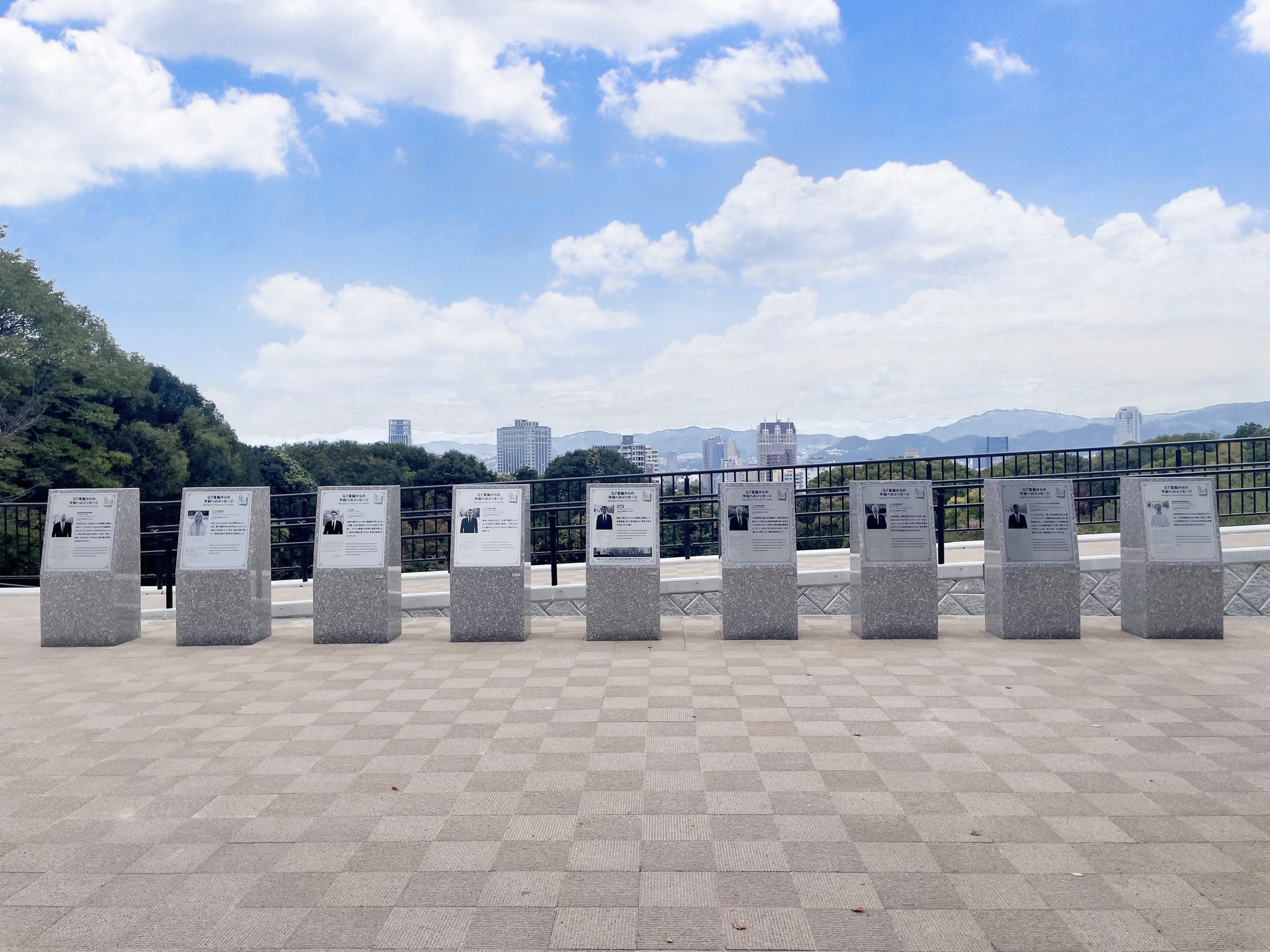
The ASF and Sakharov’s family are deeply touched by the installation of the stone monument engraved with the message of peace by Dr. Andrei Sakharov. This is a message which he personally entered in the Hiroshima Peace Memorial Museum guestbook during his visit in 1988. The stone monument was installed at the Fujimidai Observatory Deck in Hijiyama Park on March 28, 2025.
Visitors from all over the world come to Hijiyama Park to remember the victims of the nuclear blasts and to express their will for peace. Nuclear weapons may never be used again.

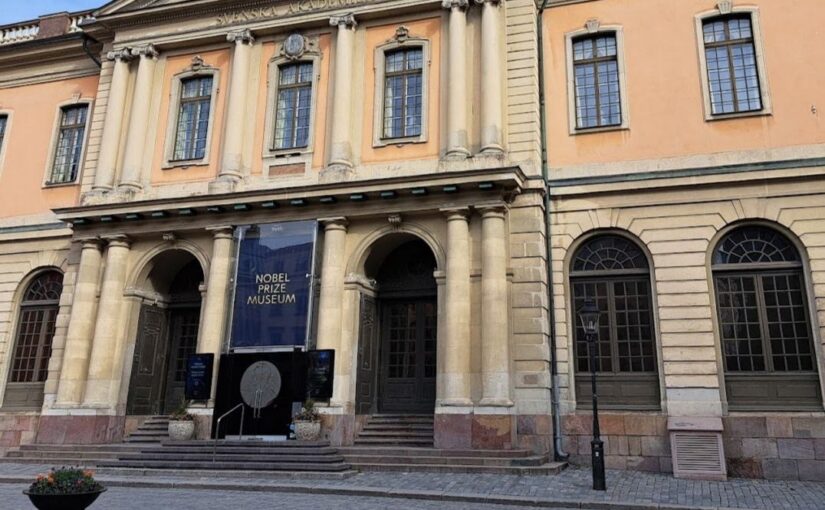
Fifty years since Andrei Sakharov received the Nobel Peace Prize
This year marks fifty years since Andrei Sakharov received the Nobel Peace Prize. Fifty years on – and the prize to Sakharov as well as his ideas remain as relevant as in 1975.
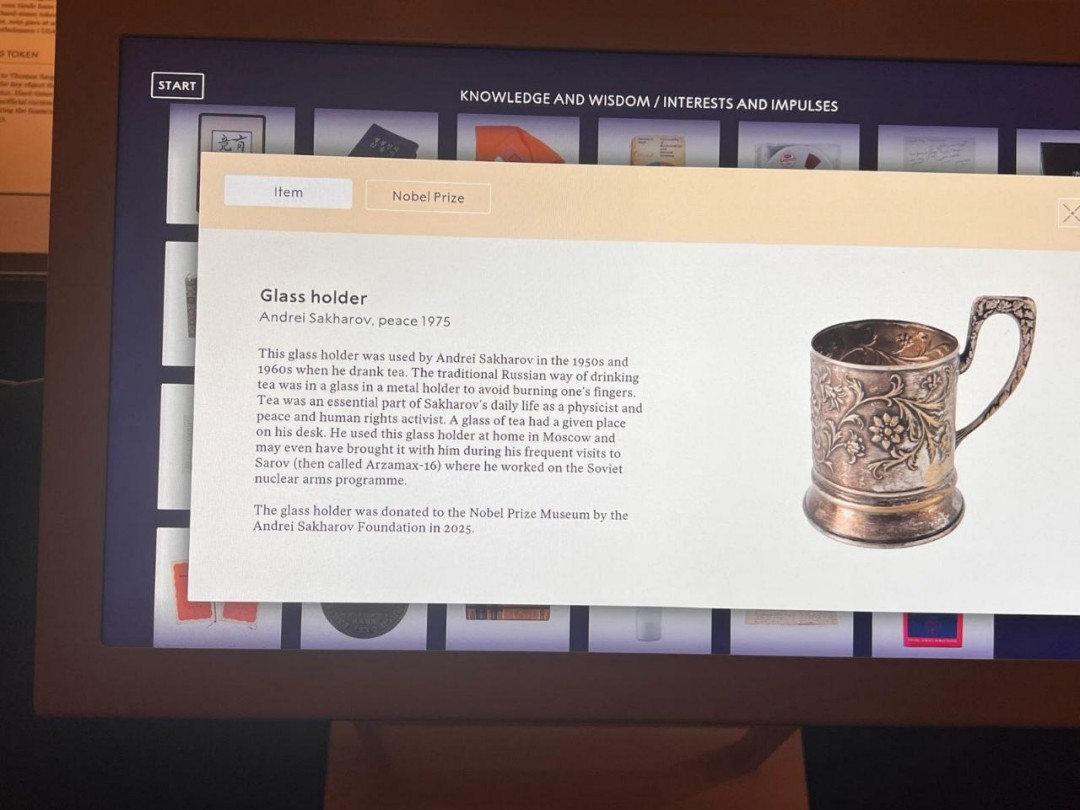
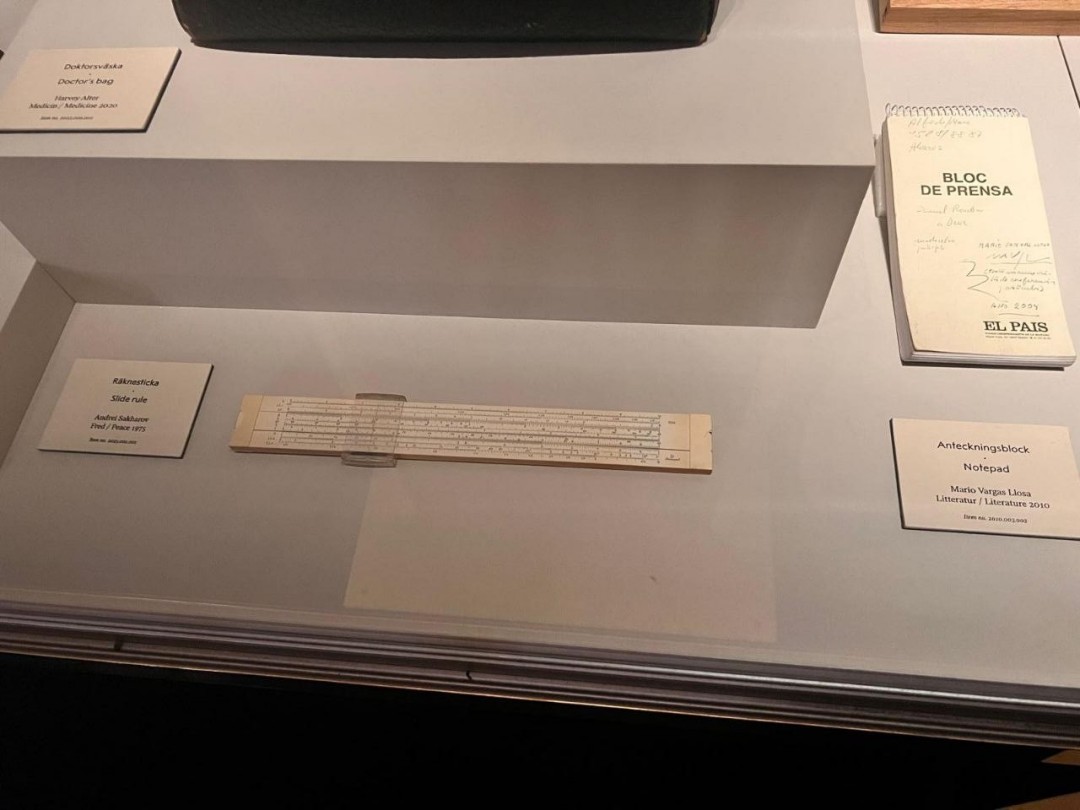
To mark the anniversary of his Nobel Prize, the ASF donated a few personal items, which belonged to Andrei Sakharov, to the Nobel Prize Museum in Stockholm. The items – a metal glass holder, a wooden spoon used with a Teflon-coated pan, and a slide rule – were the objects that Sakharov used extensively.
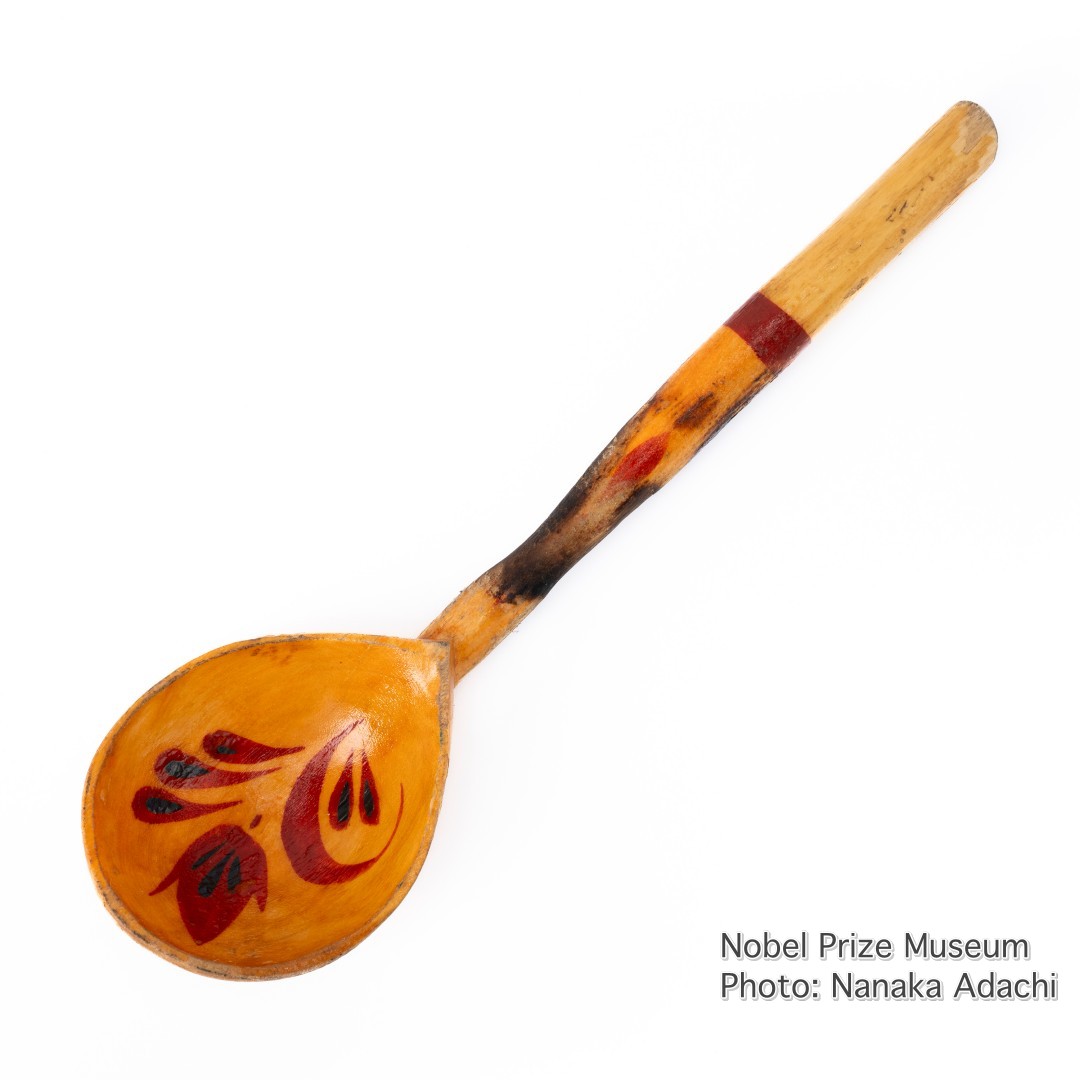
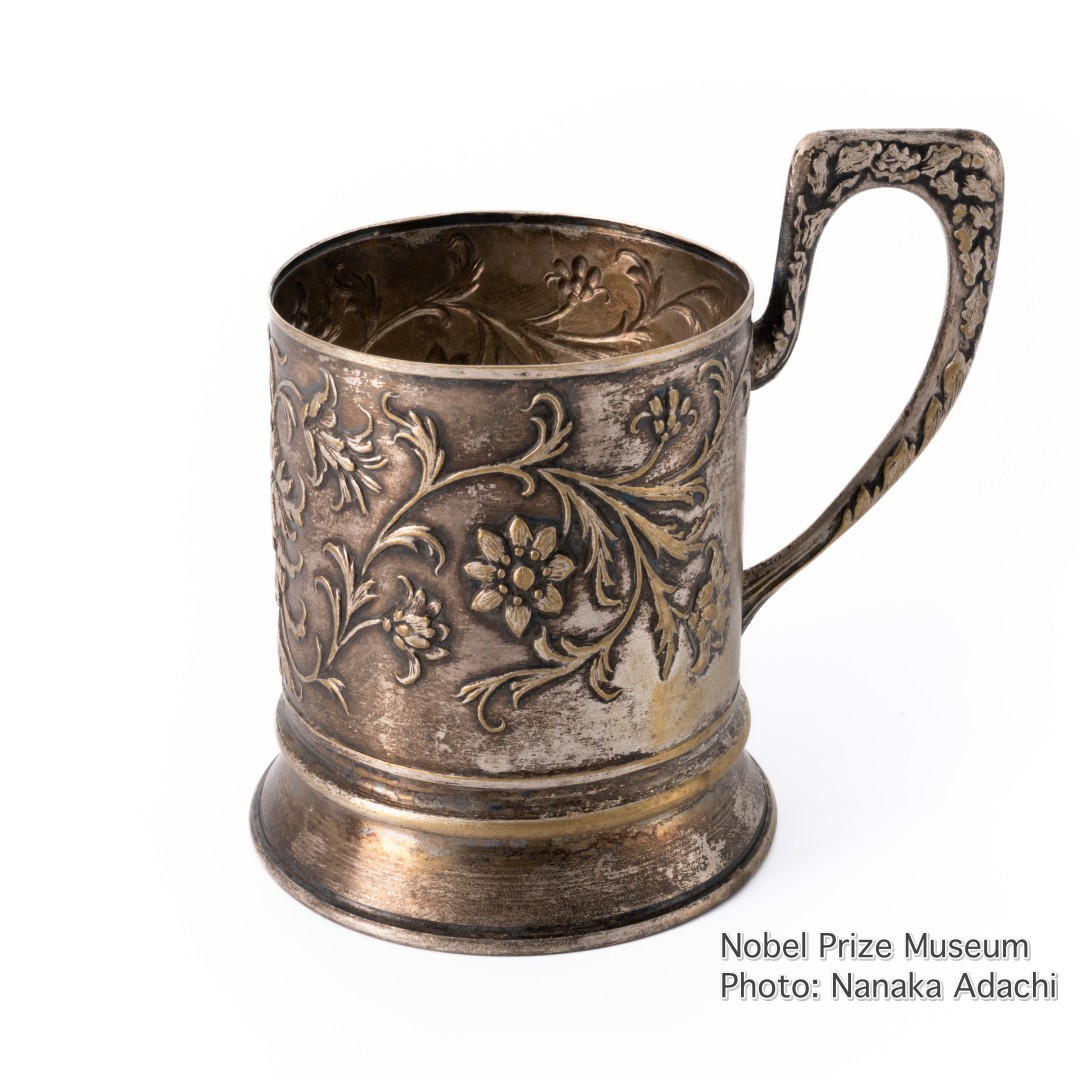
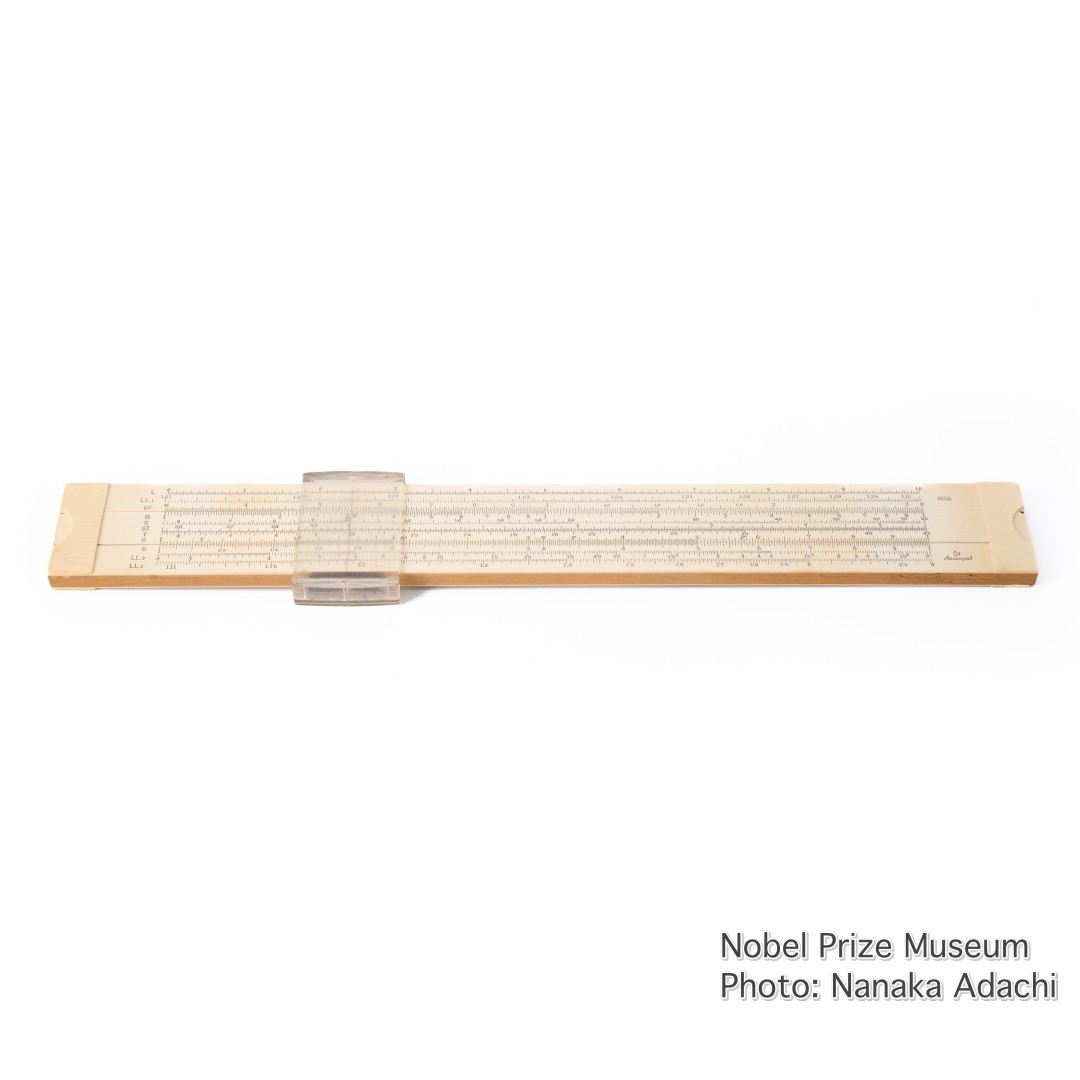
A wooden spoon, slightly burnt and heavily used, was his daily companion in Gorky, a city where Sakharov spent nearly seven years in exile (1980 – 1986). A near teetotaller, Sakharov enjoyed his tea, often drinking it from a glass with this glass holder. As for a slide rule, Sakharov had a few. Usually, one would be on his desk, while another one would be taken around in his briefcase – Sakharov was immersed in scientific problems most of the time, so having a slide rule at hand came in handy.
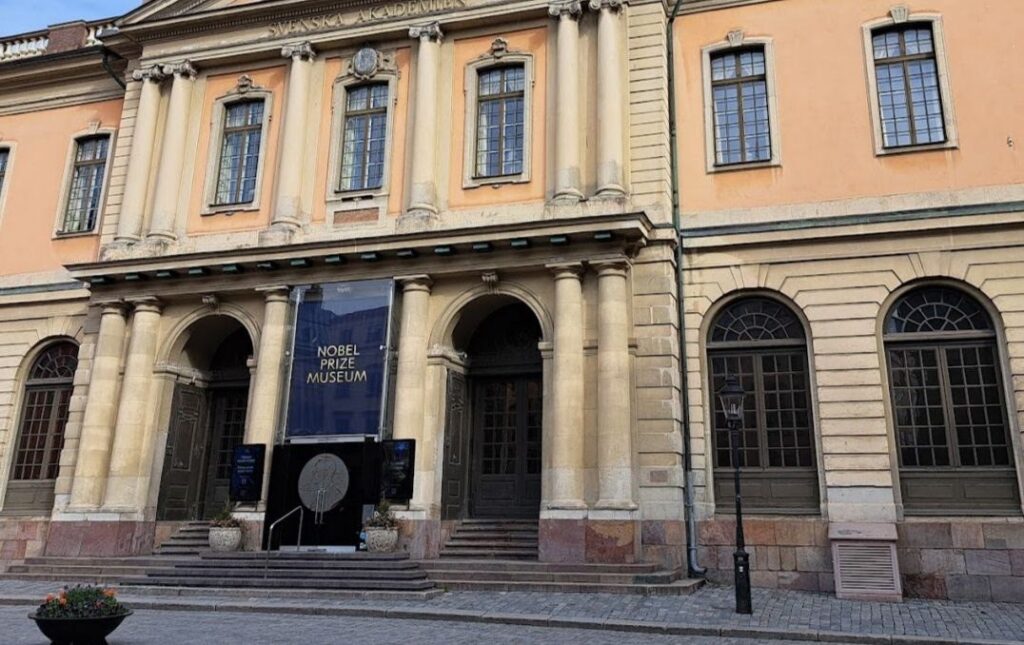
Nobel Prize Museum is located in a historic building of the old Stockholm Stock Exchange in one of the most beautiful squares, Stortorget in Gamla Stan (Old Town) in Stockholm. Created in 2001 to mark the centenary of the Nobel prizes, the Museum sets out to present “reflecting and forward-looking and spirited memory of Nobel laureates and their achievements, as well as of the Nobel Prize and Alfred Nobel.” It is one of the most visited museums in Sweden.

The ASF expresses its solidarity with Radio Liberty and VOA
The Voice of America, funded by the US Government, began broadcasting in 1942 to combat the Nazi propaganda with accurate and unbiased information. From the beginning, VOA promised its listeners the Truth, whether the news were good or bad. As the war ended, an opinion formed that the US could not be indifferent to how their country was portrayed around the globe. Initially reluctant, the US Congress approved the funding as the Cold War’s tensions grew. Over the next decades, the number of stations and listeners grew tremendously while VOA developed the highest standards of journalism.
Recently, Donald Trump ordered funding to be cut for the agency, which supports both VOA and Radio Liberty, the radio stations which have upheld the promotion of democracy and reported extensively on human rights abuses. Trump’s rational: “they have become outlets for radical propaganda.”
Trump’s decision was greeted with enthusiasm in Cambodia, Kyrgyzstan, Russia, China and other countries without strong democratic tradition. This decision is being challenged in courts by both companies, with some of funding blocks already reversed. Voice of America stopped its work while Radio Liberty continues with a much curtailed version.
Back in the Soviet days, tuning in to Radio Liberty or VOA, overcoming the KGB’s pernicious radio jamming, was like a breath of fresh air, vitally important for sharing and receiving information and getting a sense that you were not fighting alone against the autocracy. These broadcasts shared news about many Soviet dissidents, giving extensive coverage to Andrei Sakharov and Elena Bonner.
In recent years, the two multimedia companies broadened their audiences on many different platforms. For example, 2024, VoA and Radio Liberty together gained one billion of views at web-sources created for non-democratic countries.
The ASF expresses its solidarity with Radio Liberty and VOA and their journalists and staff.
![“Why I opted not to […] leave Russia while I still could”: Soviet dissident is facing 18 years prison term](https://sakharovfoundation.org/wp-content/uploads/skobov-825x510.jpg)
“Why I opted not to […] leave Russia while I still could”: Soviet dissident is facing 18 years prison term
Former Soviet dissident Alexander Skobov is determined to defend his political beliefs. In Putin’s Russia this requires immense sacrifice – something that may sadly become a reality in other countries, if they succumb to autocratic tendencies.
For Alexander Skobov, who has been in pretrial detention since April 2024, his political activism may mean he would die in prison. Nearly a year after he was arrested, prosecutors in Saint Petersburg requested 18-year prison sentence for Skobov’s social media posts about Russian agression against Ukraine and Putin’s policy.
The 68-year old activist, whose health deteriorated markedly over the year of imprisonment, is charged with “justifying terrorism” and “involvement with terrorist community.” Additionally, he was charged for his involvement with the Free Russia Forum, an association, founded by the world chess champion Garry Kasparov. The Free Russia Forum was pronounced an undesirable organization, which makes it illegal for Russian citizens to interact with it.
Skobov joined the opposition movement in the USSR in the 1970s and was twice forcibly placed in a psychiatric hospital, for a total of six years. Using psychiatry for political persecution was a common practice in the Soviet Union. Despite the pleas from his family to leave Russia after the full-scale invasion of Ukraine, Skobov chose to remain, while admitting that he did not know what practical use his position may have in the short-term.
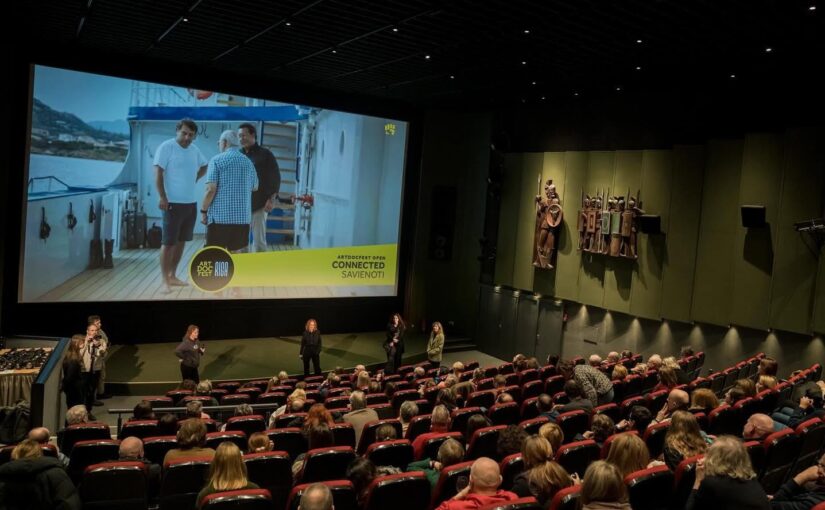
WHEN THE AMERICAN DREAM MEETS THE RUSSIAN DESTINY
“CONNECTED”, a new documentary by an award-winning London-based director Vera Krichevskaya, premiers at Riga’s ArtDocFest to a wide critical acclaim and emotional public reception.
The film tells a story of Dmitry Zimin. A radio engineer by training, Zimin transformed himself into an incredibly successful businessman in the course of the Gorbachev’s Perestroika. Zimin and Augie Fabela, his American partner founded VimpelCom, one of the leading mobile operators in Russia. Their business success enabled Zimin to become one of the most prominent philanthropists in Russia.
In the period from 2001 to 2015, Zimin’s philanthropy project, a foundation called “Dynasty” spent over 2.5 billion rubles on numerous science and education projects in Russia. In February 2015, Dmitry Zimin’s philanthropic work was recognised with a prestigious award from the Russian Ministry of Science and Education. Ironically, three months later, in May 2015, the Russian Ministry of Justice labelled “Dynasty” a foreign agent. The reason for the authorities’ ire was Zimin’s support of the Russian opposition. Disgusted, Zimin closed down “Dynasty” and left Russia with his family.
The film is about death. Eighty-eight years old, frail and cancer-stricken Zimin bids farewells to his family and friends aboard of a boat and shares his conviction that dying is a necessary feature of life, a sign of renewal. One of his friends quotes Hemingway to explain Zimin’s fortitude: “But man is not made for defeat. A man can be destroyed but not defeated.” “Bury me in my ski boots and write on my grave “this subscriber is out of the network coverage,”” suggests Dmitry Zimin to his family.
Leaving this world on December 21, 2021, Zimin predicted the start of Putin’s war in two months. Alexey Navalny, whom Zimin had long supported, was by then in prison, later to be killed. Overcome with raw emotions, viewers may feel longing for another Russia, Russia where her true heroes are feted and not destroyed.
The trailer of the documentary below
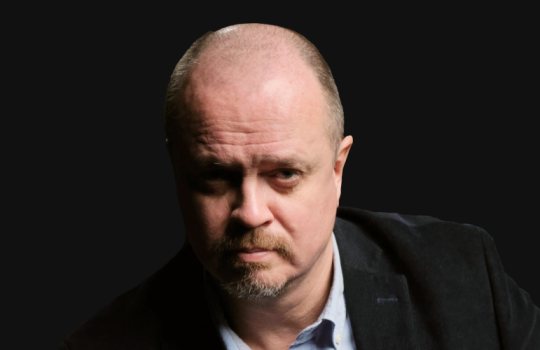
Ivan Pavlov: When the laws do not work, legal assistance is palliative. But the importance of palliatives should not be underestimated
Founded in December 2021 by Ivan Pavlov, a prominent lawyer, First Department is a human rights project with a special focus on closed court hearings and the use of criminal cases against political opposition in Russia. His previous legal project was labelled “undesirable”. To avoid criminal charges himself, Pavlov and his team left Russia.
The war in Ukraine led to the significant growth of a specific category of political repression, namely, charges with state treason. The ASF talked with Ivan Pavlov about the use of “state treason” charges.
– How many people are charged with treason yearly in Russia? For example, in the USA, there have been about 40 cases of people standing accused of treason throughout the history.
Such an article is in the legislation of almost every country, it’s just that often there is no practical application. As for Russia, until 2014, before the start of direct confrontation with the West, there were about 2-3 sentences a year, in 2015 there was an outbreak of 15 sentences. Every year, before the start of a full-scale war, about 15 sentences were passed for high treason. In 2022 there were 16 of them, in 2023, the total grew to 39. Sometimes about two years can pass between the initiation of a case and the delivery of a verdict. In 2023, it is known that about a hundred cases have been filed, and now, I am sure, there will be even more. This is a sign of war, there is a demand for internal enemies. The FSB intelligence service is authorized to search for and develop them.
– At the beginning of the war, there were assumptions that the FSB was accustomed to considering treason cases individually, that they did not have the resources to initiate such cases en masse. How did they do this?
I wouldn’t say it’s massive. 100 cases for 140 million Russians is not a massive number. These are not thousands of cases. There cannot be too many such cases. Otherwise, the cost for private investigations of treason will be devalued. This is specialisation of the elite first department of the investigative department and elite FSB operatives. Now they have begun to invite regional departments to develop it. But still, there are not so many cases yet: there is no demand for thousands of cases of treason. There shouldn’t be too many internal enemies – that’s a political component. There are enemies, but they are isolated, they need to be shown. The authorities are looking for balance.
– Previously, the target group was scientists, but now wider layers are under attack?
Scientists were one of the categories. Previously, treason cases were initiated against as diverse members of the Russian society as bloggers, housewives, top managers of large companies, military personnel, clergy, and farmers markets tradespeople. In 2022, amendments were made to the definition of the law. Switching to the enemy’s side has been added as an additional form of treason. They identify young people who have careless correspondence with Ukrainian organizations, they are charged with assassination attempt or preparation to go to the enemy’s side, and they are also charged with Article 275 of the Criminal Code. There are a lot of cases for providing assistance to a foreign organization in conducting activities directed against the security of Russia. Donations to Ukrainian foundations are considered treason in the form of financial assistance.
– A young man, Nikita Zhuravel, was sent to jail for publicly burning the Koran. Then a video was circulated of Nikita being beaten by Adam Kadyrov, the son of the head of Chechnya, in the interrogation room. Then new accusations appeared against Zhuravel: that he not only burned the Koran, but also photographed something for the Ukrainians?
Yes, and he got 14 years in prison for treason.
– The case of 66-year-old physicist Anatoly Gubanov and other scientists. Why are elderly scientists often charged with treason in Russia? Because there are generally a lot of older people in Russian science?
An elderly scientist is an easy prey for a security officer. It’s convenient to take it and shake it, the old one. He will completely agree. These are people of the Soviet type: they trust the system, they resist little. They are charged mainly with actions that took place during the Medvedev warming period, when many scientific institutions collaborated with foreign institutions. International projects were approved by all necessary government authorities.
Accordingly, information was exchanged with foreign organizations. It was normal when, but then it became overrated. In order to impute treason, it is necessary to find the one who sent secret information to foreigners. They take an international project and look: somebody was authorized to correspond with foreign partners. They check his email. They find some of his reports. They give reports to experts who are ready to see state secrets in anything. This is how the scientist becomes the accused.
– Often, criminal cases of treason, when they are paid attention to in the media, look very strange. The accusations are quite ridiculous. Doesn’t the FSB care?
They hate when you call them idiots, but they fulfill a political demand. They receive promotions in ranks, awards, and medals. These cases are their career ladder.
– Have you come across stories where the accusation of treason was actually applied to people who stole some secrets for foreign intelligence?
In my large practice in these matters, I have not met any real spies.
– “Meduza” published the story of a real person, a former National Bolshevik, who, for ideological reasons, got a job in police in order to transmit information to American intelligence, is now imprisoned for treason.
Real spies probably exist: just how to catch them. Especially if all the forces of the secret service officers are spent on developing fictitious spies.
– There was only one case of acquittal regarding treason, the Pasko case many years ago?
In 1999, Alexander Nikitin was acquitted by the St. Petersburg City Court. Grigory Pasko, in a completely symmetrical case, was already convicted in 2001: he was sentenced to only four years in prison. The article provides a punishment from 12 to 20 years. A year later, Pasko was released.
– How much is the average price now for treason?
Fifteen years in prison.
– Journalist Ivan Safronov sentenced to 22 years because he had episodes added up?
Yes. Fifteen is given per episode.
– In the current conditions, when someone accused of treason begins to defend himself, what can he achieve? What is a good result?
As you correctly noted, the last acquittal was in the previous century. Now, at best, you can count on a minimum term, and it is better not to go through legal procedures at all. Sometimes people can be taken away from Russia before they come for them.
– And if FSB has already arrived, how can you help?
Transfers to pre-trial detention centers. And letters. Now, when the laws do not work, legal assistance is palliative. But the importance of palliatives should not be underestimated. A lawyer, a person nearby who supports you – this is also important. Informationally, at least. You will know what is going on. A competent person who records all violations. These cases will be reviewed later. It is important that in criminal cases of treason, a competent lawyer records violations and leaves traces in the case materials. But in wartime, fair trials in politically motivated cases cannot be counted on.
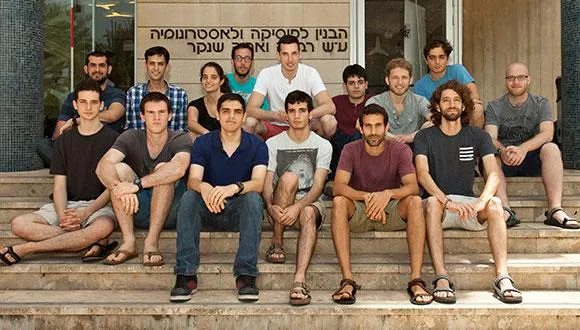
The Andrei Sakharov Excellence in Physics at Tel Aviv University