
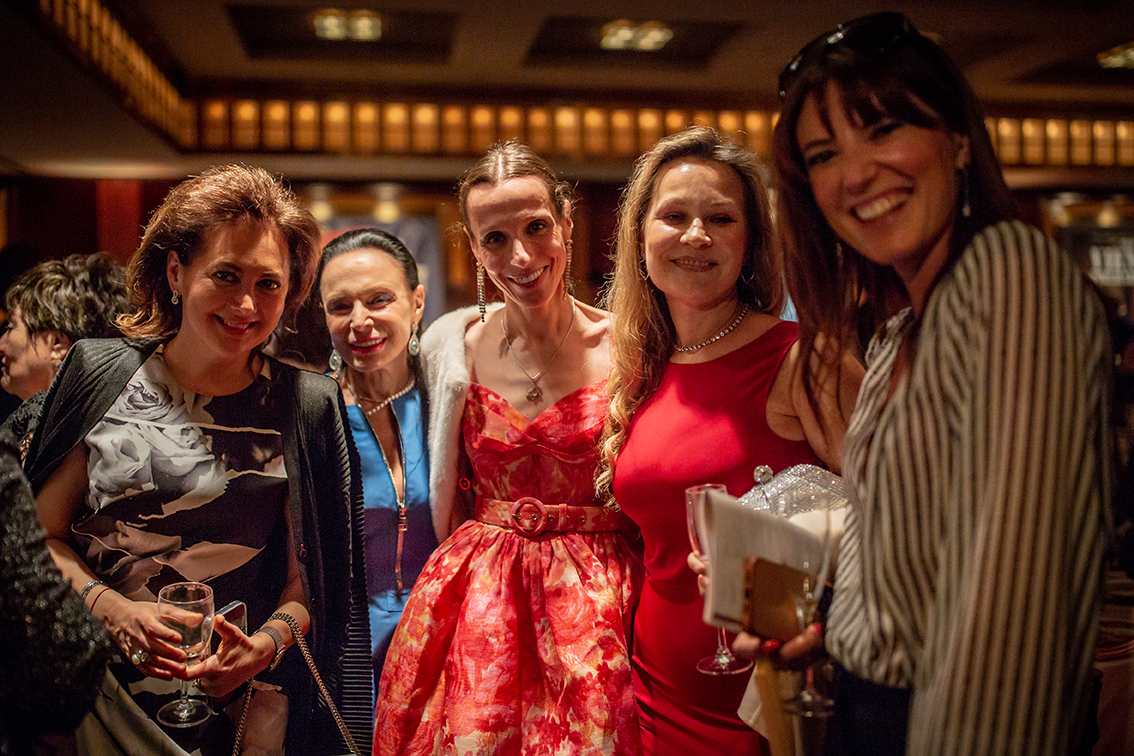
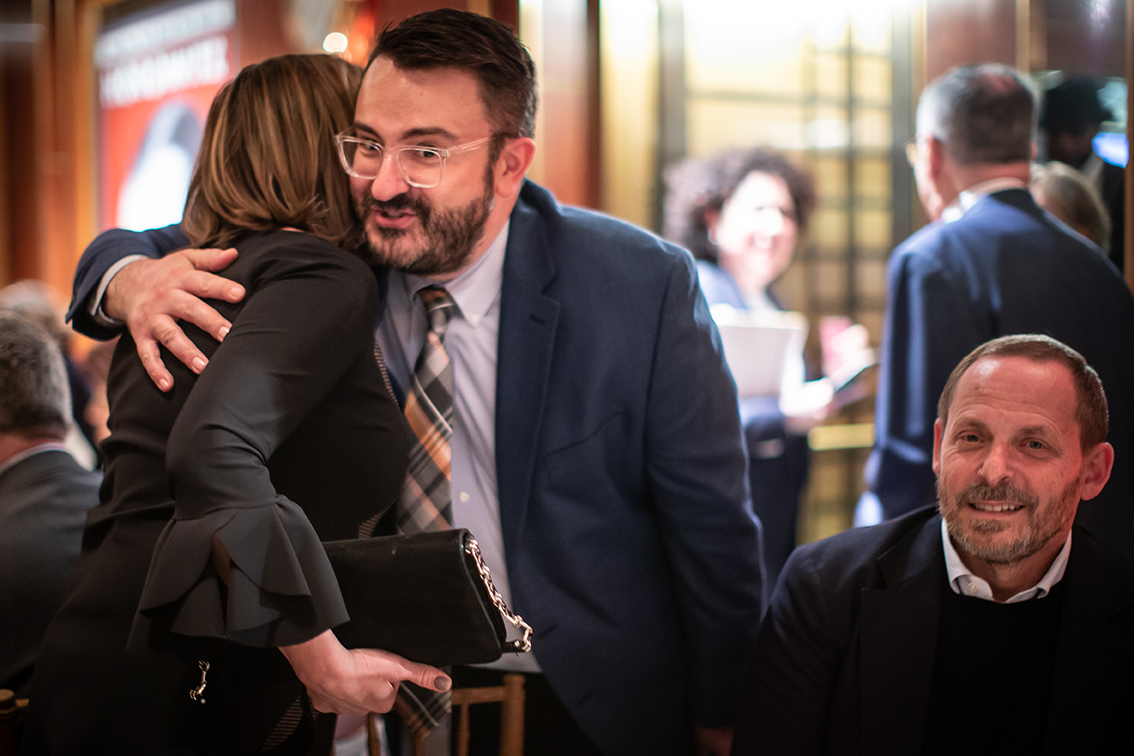
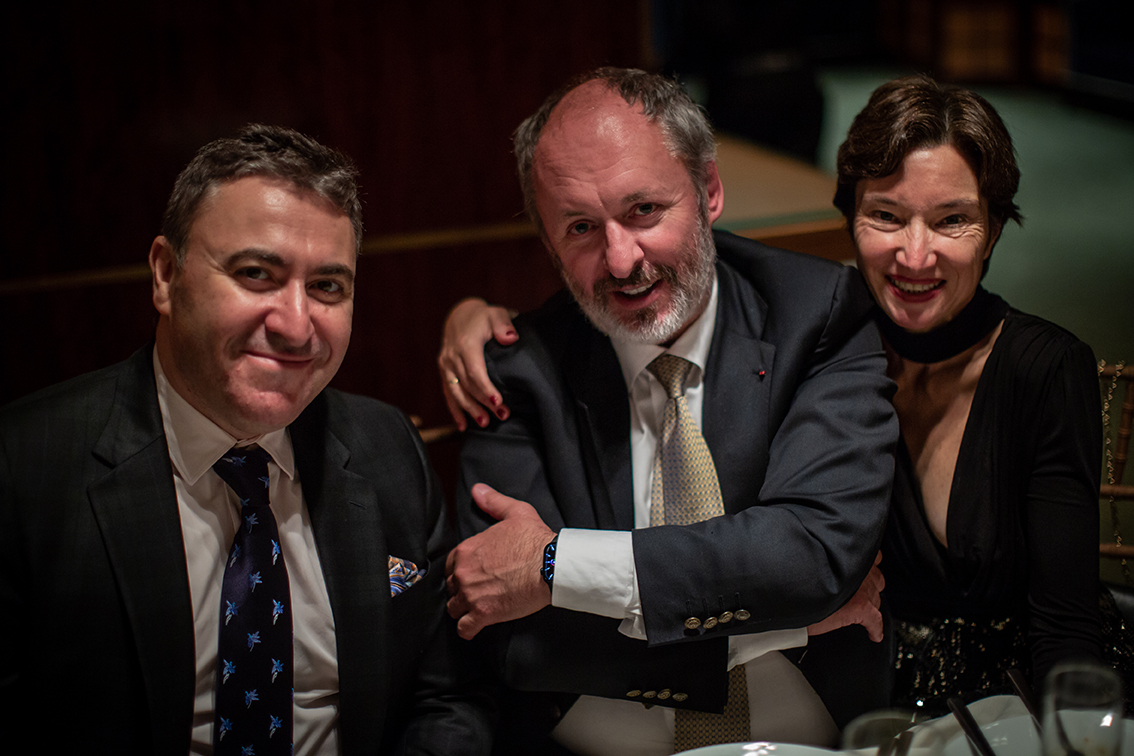
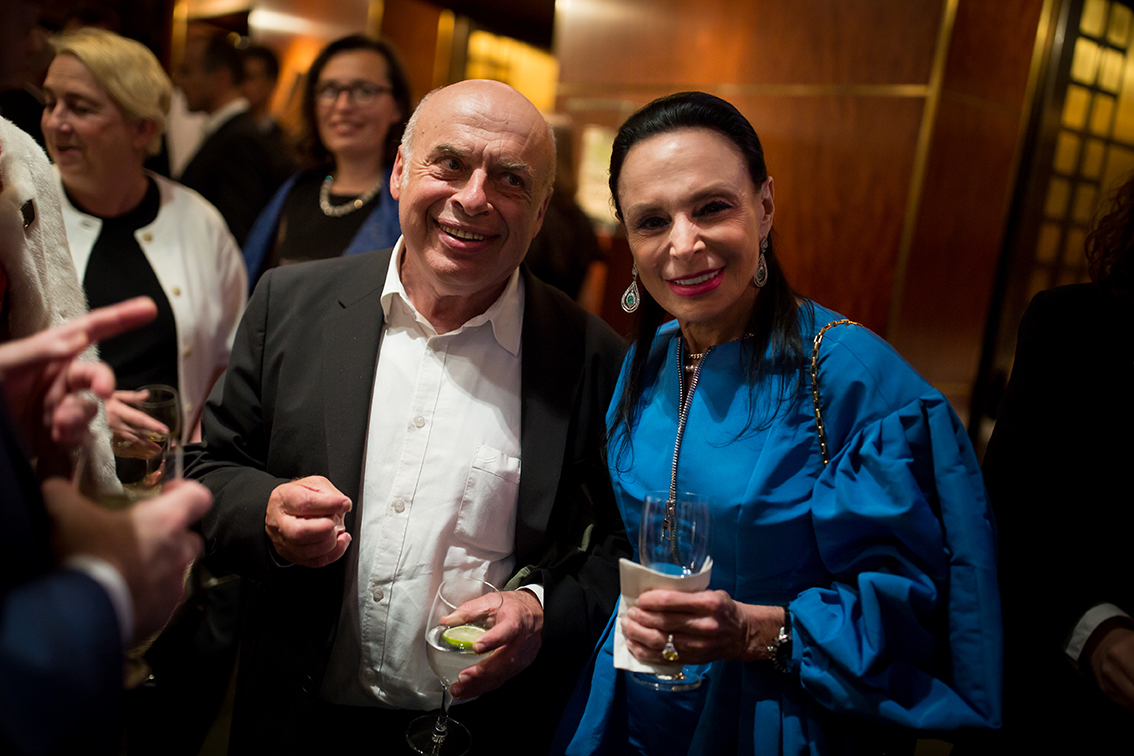
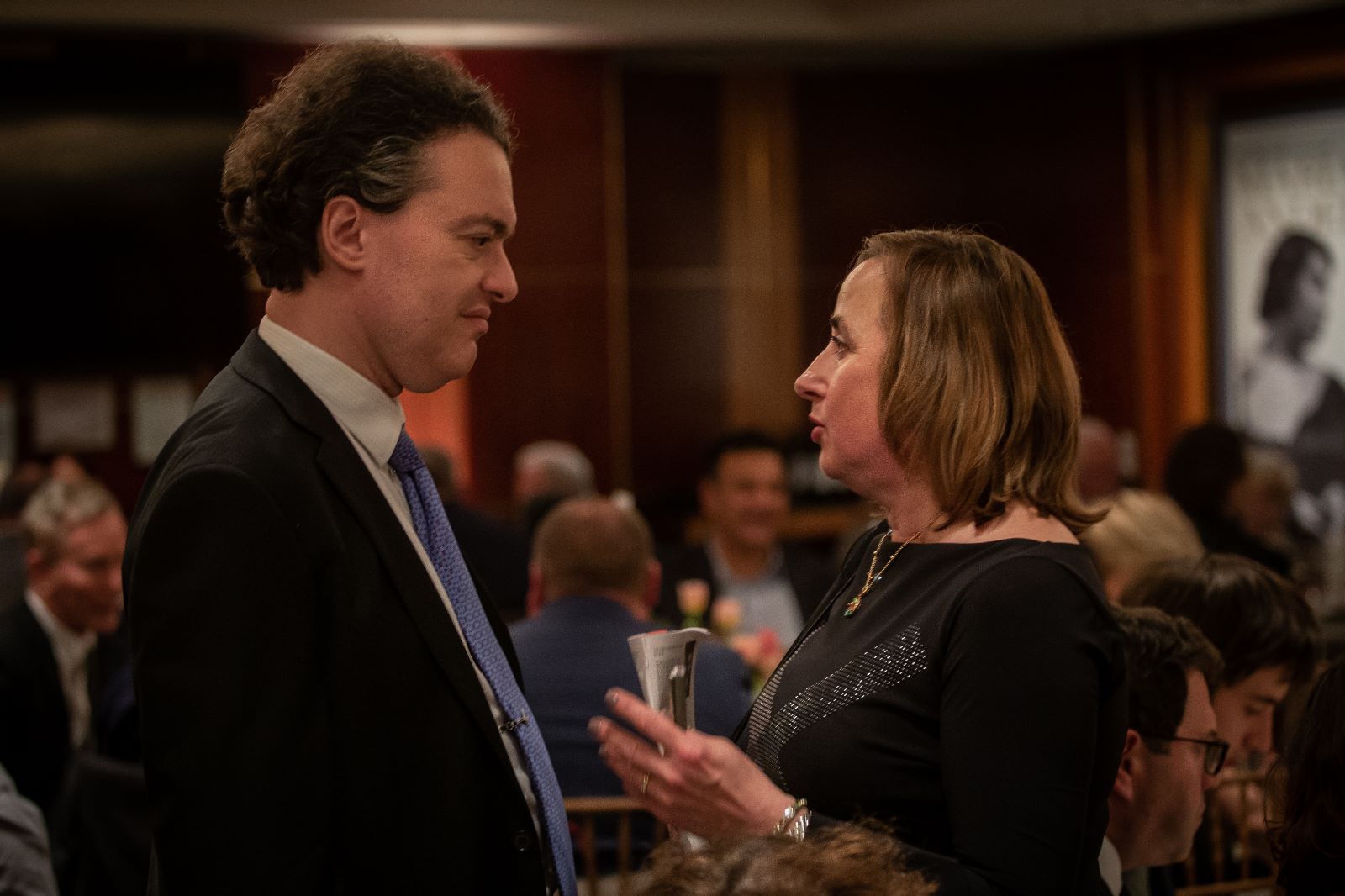
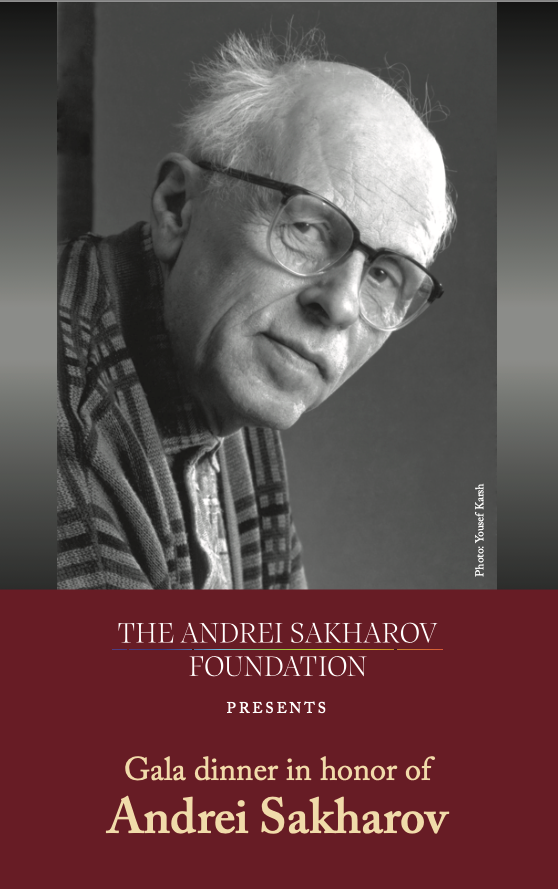
Post-concert gala dinner in support of the Andrei Sakharov Foundation



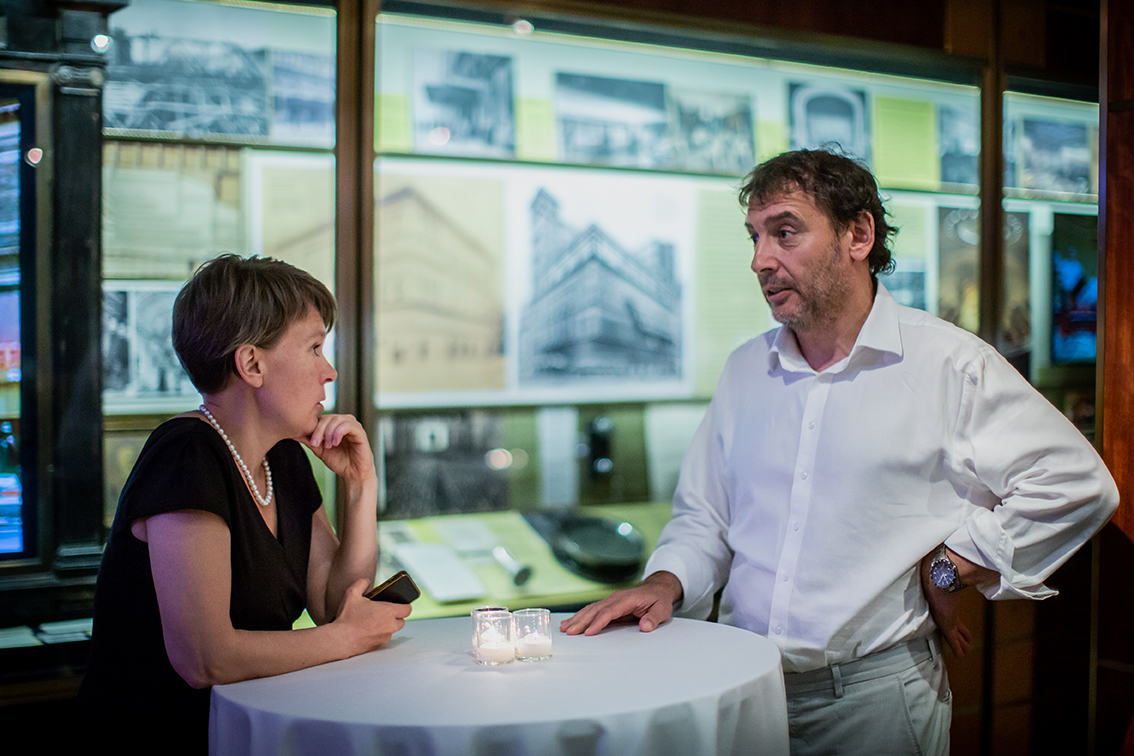



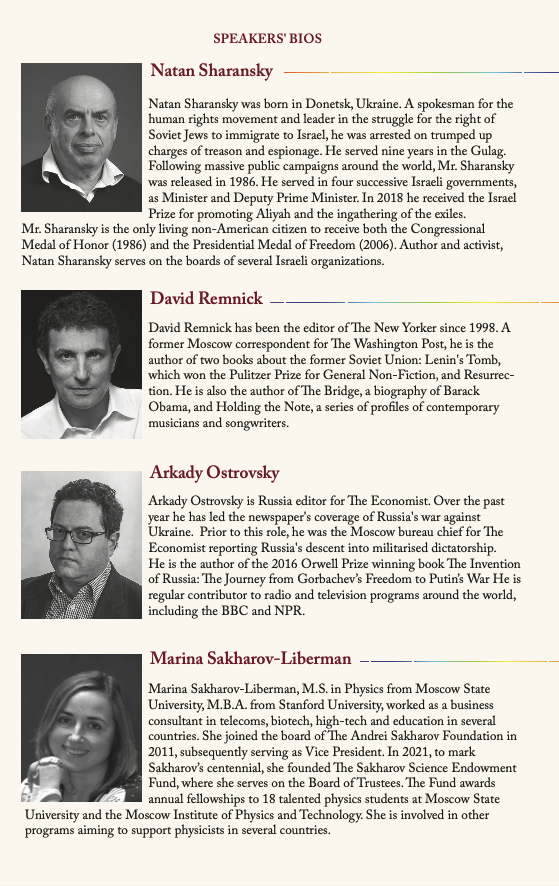
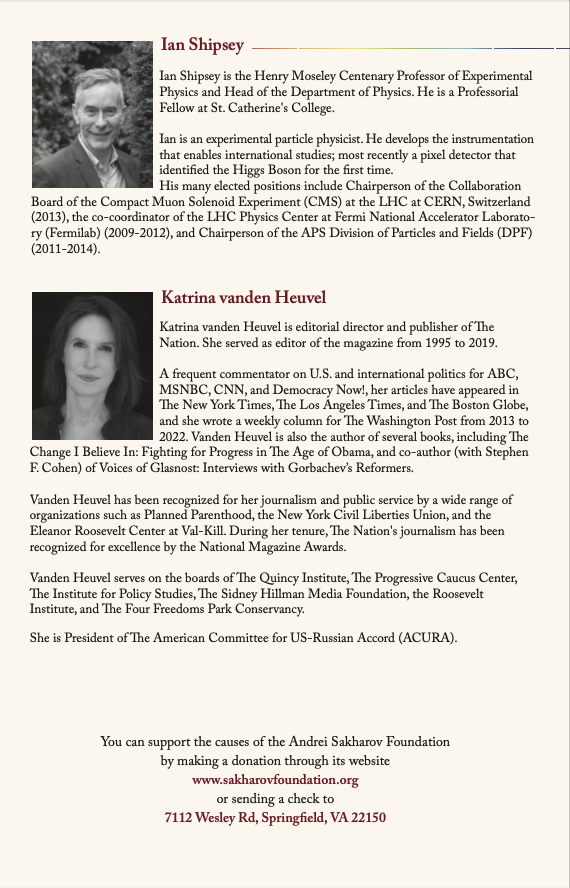
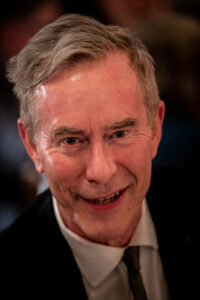 Head of the Department of Physics, Oxford University, professor Ian Shipsey delivered an exciting overview of the achievements of Andrei Sakharov and the enduring impact of his theoretical works on many physics fields today
Andrei Sakahrov, talented and versatile scientist, fearless activist and staunch proponent of human rights, was described in the citation for his 1975 Nobel Peace Prize as “spokesperson for the conscience of mankind.
Sakharov was born in 1921 into a family with the traditions of the Russian intelligentsia. His father a well-known physics teacher, early schooling at home, high school, then in 1938 he enrolled in the Moscow University Physics Department.
In October 1941, the German army approaching, the university transferred to Ashkhabad, in Turkmenistan, where Sakharov graduated in 1942 and gained his first vivid impression of the life of workers and peasants during that difficult summer.
Sakharov's fellow students recollect his remarkable abilities to think, formulate and resolve science problems. And that he was the only one who, in that time of deprivation and hunger, would give his own last piece of bread to someone who badly needed it.
After university, Sakharov worked for three years as an engineer at an arms factory where he developed inventions to improve the plant's inspection procedures.
His scientific research began at the Lebedev Institute in 1945 under Tamm an eminent physicist and 1958 Nobel Laureate. Sakharov’s first paper at 26 was on the production of subatomic particles in the cosmic rays that rain down on us from outer space. His thesis in 1947 was on transitions in nuclear physics.
In 1948, Sakharov was enlisted in classified work on atomic weapons, in Tamm's group. Sakharov was one of the creators of the Soviet atomic bomb and is often referred to as "the father of the Soviet hydrogen bomb”.
Andrei came to prominence with his contributions to thermonuclear fusion with Tamm. including the idea to contain a plasma (a highly excited state of matter found for example in the center of the sun) in a magnetic bottle - the tokamak. The Tokamak paper was declassified by the Soviet Academy on the eve of the 1958 Geneva Conference on Peaceful Applications of Atomic Energy. Today the tokamak is the foundation of one of the two main paths of research toward self-sustaining nuclear fusion which, by mimicking the sun’s conversion of hydrogen into helium has the promise to provide almost unlimited green energy thereby offering one of several possible solutions to climate change. For his fusion work Sakharov became an Academician in 1953 at 32 - at that time the youngest ever to be so honored.
Sakharov published no scientific research papers between 1958 and 1965 a period when he grew increasingly concerned about the accelerating course of the arms race and the dangers of radioactive fallout from continued testing of nuclear weapons in the atmosphere. He published an analysis of the harmful consequences of radioactive pollution in 1959 and was actively involved in initiatives in the Soviet Union leading to the Limited Test Ban Treaty of 1963.
In 1965 Sakharov entered a new field: cosmology. His third publication is one of the boldest and most famous physics papers of the 20th century. Its aim: to explain why the matter in the universe is built of protons, neutrons and electrons, while antiprotons, antineutrons and positrons are so rare that we can only observe antimatter when produced in high-energy collisions, mainly in particle accelerators such as at CERN and Fermilab. The particle-antiparticle disparity is referred to as the "matter anti-matter asymmetry of the universe". This disparity is not academic when matter and anti-matter meet they annihilate producing light. It they were of equal abundance they would have long since annihilated each other and there would be no matter and no us. Sakharov made the elegant assumption that originally the universe had no matter anti-matter asymmetry. He then showed an asymmetry required three things first that the asymmetry would build via out of equilibrium processes during the expansion of the early universe, second the proton must be unstable, and third processes violating particle antiparticle symmetry must be at play. These are known today as Sakharovs’ three conditions1.
Features of Sakharov’s visionary theoretical ideas became characteristic of later theoretical models. The quest to discover proton decay is the goal of a worldwide program of exquisitely sensitive large-scale underground particle physics experiments, and Sakharov provided the motivation and inspiration for generations of particle physicists including myself to seek and study matter-antimatter asymmetry in a global program. Despite tremendous progress recognized with the 1980 and 2008 Nobel Prizes, matter antimatter asymmetry remains one of the greatest mysteries of particle physics.
In 1968, Sakharov published in the West his first "non-physics" paper — his remarkable "Reflections on Progress, Peaceful Coexistence and Intellectual Freedom." He develops two basic themes: That the division of mankind threatens it with destruction, and that intellectual freedom is vital to human society. Sakharov repeated these two themes for the rest of his life.
Sakahrov was not able to receive the Nobel Peace Prize in person. From 1980, during his exile in Gorki, he valiantly remained in touch with developments in science, receiving physics literature by registered mail. He continued to study the asymmetry of the universe until the end of his life his last physics paper and last physics talk were on the topic.
Sakharov's cosmological views were an important part of him.. At the end of his Nobel Lecture he writes: “Like a gleam in the darkness, we have appeared for an instant from the black nothingness of the ever-unconscious matter, in order to make good the demands of Reason and create a life worthy of ourselves and of the Goal we only dimly perceive”.
In a message entitled “the responsibility of scientists’ to a 1981 New York meeting held in his honor he wrote ‘scientists are not only better informed than the average person but also strive for and enjoy more freedom. Freedom, however, entails responsibility’. With steadfast ideals and indomitable courage Andre Sakahrov never ever shirked this duty.
Andrei Sakahrov was brave, he was admired, respected, trusted and loved. He was a wise council, a compelling call to action and to accountability, the conscience of humankind, a heroic figure. But not only was he these things he is these things and more. In a very real sense he is with us today in this room and beyond it. Only the unloved die for love is immortality.
1 For the physicists: the Sakharov Conditions are a set of three necessary conditions that a baryon-generating interaction must satisfy to produce matter and antimatter at different rates. These conditions were inspired by the then recent discoveries of the cosmic background radiation and CP-violation in the kaon system. (1) Baryon number violation; (2) C-symmetry and CP-symmetry violation; and (3) Interactions out of thermal equilibrium. Baryon number violation is a necessary condition to produce an excess of baryons over anti-baryons. But C-symmetry violation is also needed so that the interactions which produce more baryons than anti-baryons will not be counterbalanced by interactions which produce more anti-baryons than baryons. CP-symmetry violation is required because otherwise equal numbers of left-handed baryons and right-handed anti-baryons would be produced, as well as equal numbers of left-handed anti-baryons and right-handed baryons. Finally, the interactions must be out of thermal equilibrium, since otherwise CPT symmetry would assure compensation between processes increasing and decreasing the baryon number. This footnote based on: https://en.wikipedia.org/wiki/Baryogenesis.
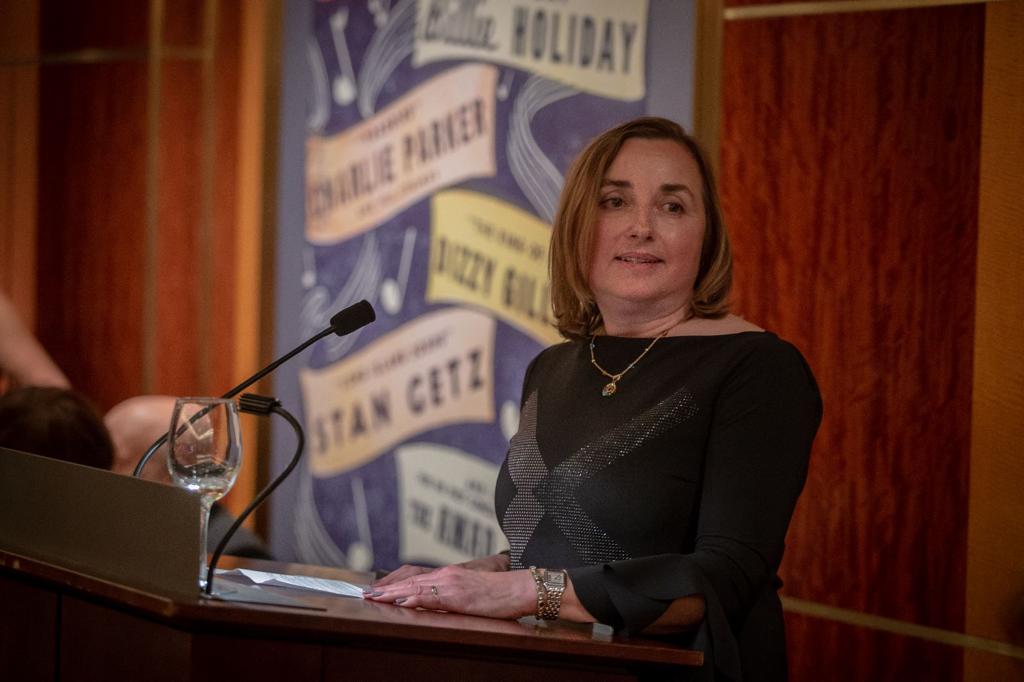
 Katrina vanden Heuvel speaking at the gala in honor of Andrei Sakharov
Someone once said that history is to a nation what memory is to an individual.
Or as the Russian writer Yuri Trifonov wrote,” history is not simply something that was. history is with us and in us.”
Today we mark the anniversary of a great man. As darkness and repression envelope Russia, forgetting Sakharov’s humane legacy is a step backward — and it must be resisted.
Andrei Sakharov’s journey from a Soviet nuclear physicist, one of the premier creators of the country’s thermonuclear bomb, to its key anti-nuclear dissident, fused with his decency, and fearless truthtelling, made Sakharov a moral compass. Not simply the conscience of Russia; but a citizen of the world.
Sakharov understood the true consequences of the use of nuclear weapons and the senselessness of the arms race. He was unique.
Yet there was someone else who understood the perils of nuclear weapons -- Mikhail Gorbachev.
My late husband Stephen Cohen and I had a deep admiration for Mikhail Sergeevich, both as an individual and as a leader who used his power so courageously to change his country and the world.
I believe he was the most radical thinker about security to ever lead a nuclear country. As President, he reversed generations of military buildup and democratized his country to help put an end to the Cold War. And of course, his legacy will be measured by bringing Andrei Sakharov and his wife, Yelena Bonner, back to Moscow from exile in Gorky — in 1986.
In 1989, Sakharov was elected to the Congress of People’s Deputies where he spoke boldly in support of radical changes and democratic reforms. He and Gorbachev sparred — as millions watched on television — yet there was a genuine respect between the two men. After all, the two Nobel Prize winners understood that fundamentally, human security is best achieved through cooperation, democratization and demilitarization.
I would echo a principle repeated many times by Gorbachev — "if we don’t attempt what seems impossible, we will risk facing the unthinkable.”
More than three decades later, after Gorbachev attended Sakharov’s funeral (in 1989) — he stood humbly at the foot of his coffin — and then Gorbachev's passing last August (2022), there is little if anything left of the historic opportunities Sakharov and Gorbachev opened up for their country and the world. There remains, however, the hope that as sometimes happens in history, the memory of lost alternatives will one day inspire efforts to regain them and that will require a new generation here, there to show the decency, idealism and political skills.

Concert in honor of Andrei Sakharov

The New York Classical Review published an article by David Wright about the Sakharov concert
The Andrei Sakharov Foundation wishes to thank the following people and organizations for their help and support
Concert in honor of Andrei Sakharov
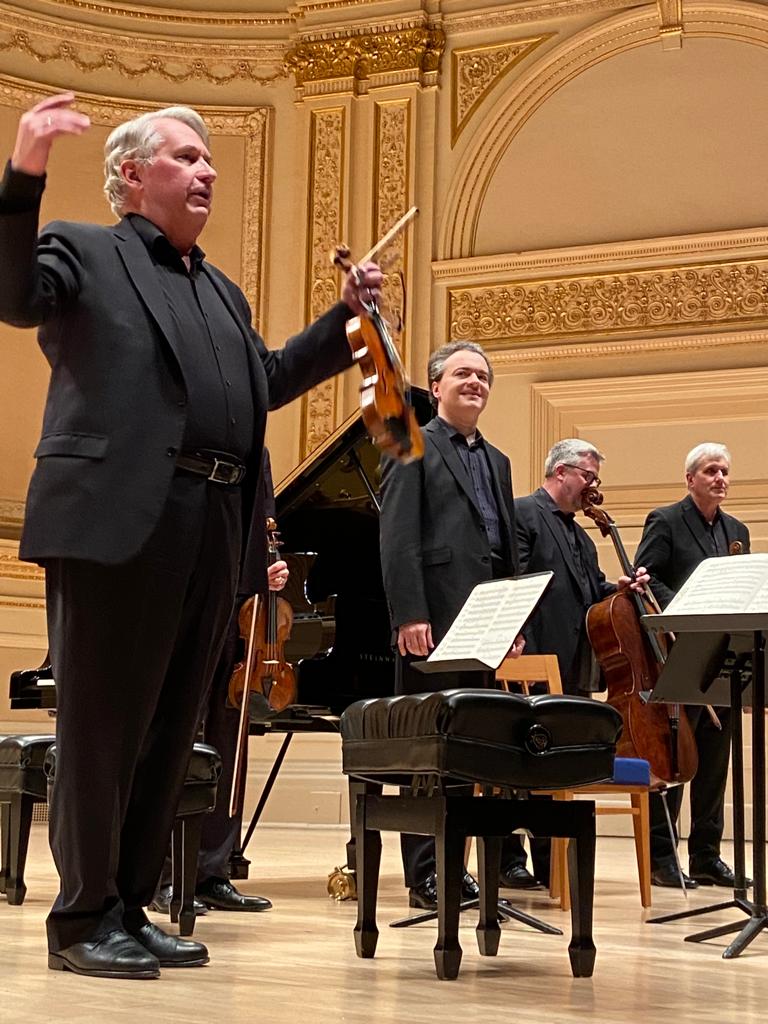
The sold-out concert in honor of Andrei Sakharov was held on Sakharov’s birthday, May 21st, at Carnegie Hall. It was a truly historic and extraordinary musical event, a fitting tribute to the Russian scientist and human rights activist, whose moral authority remains influential throughout the world. The line-up of the musical talent, including Evgeny Kissin, Lera Auerbach, Maxim Vengerov, Gidon Kremer, Steven Isserlis, Georgijs Osokins and the Emerson String Quartet, was unprecedented (see New York Classical Review for more details). The concert lasted for three hours, filling the Stern Auditorium/Perelman Stage with incredible rendition of beautifully seleted pieces of music (see the concert program), the performances greeted with lasting standing ovations. One could hear many guests repeating the same remark, “the best concert I’ve been to in my life”.

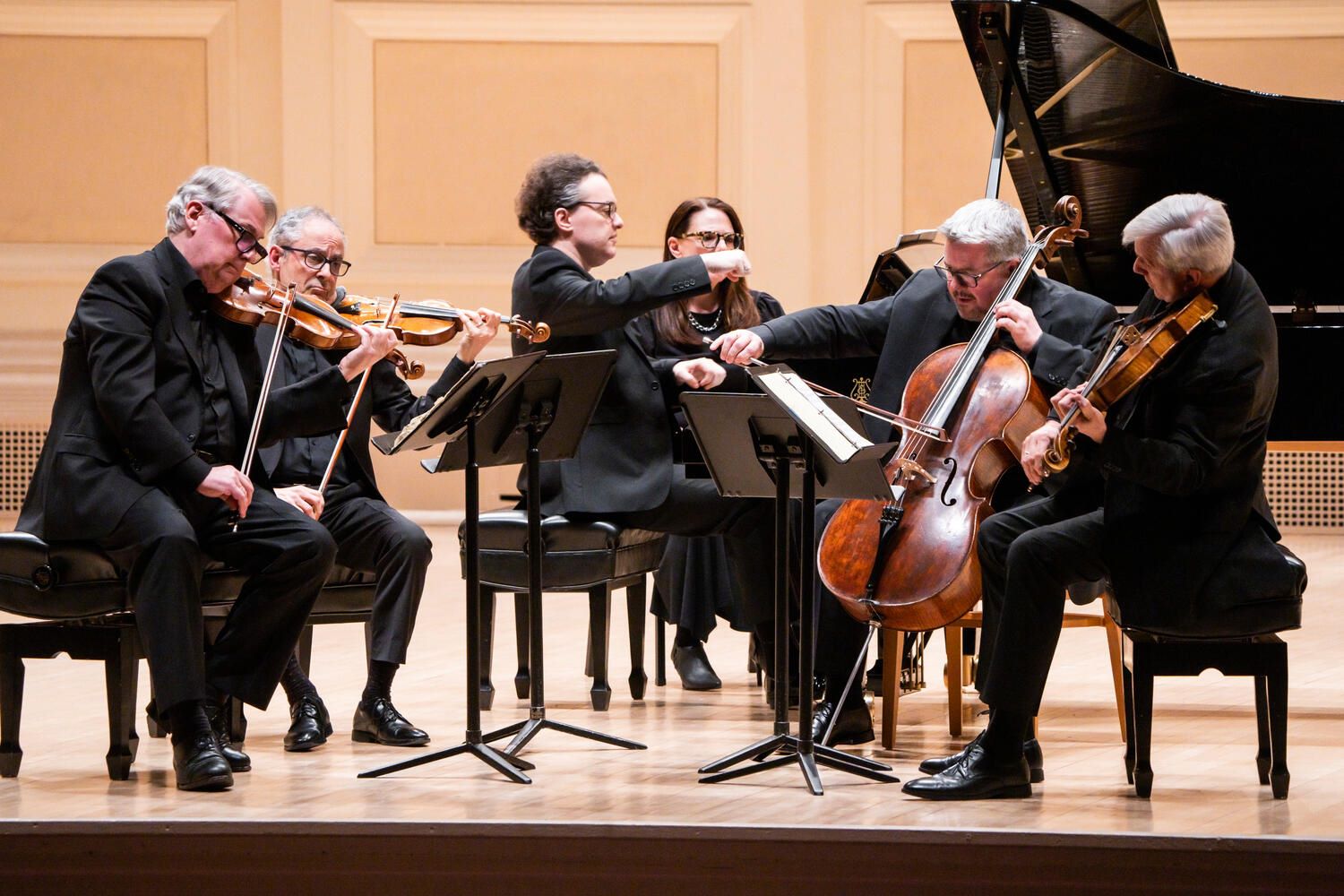

Post-concert gala dinner in support of the Andrei Sakharov Foundation
The New York Classical Review published an article by David Wright about the Sakharov concert
The Andrei Sakharov Foundation wishes to thank the following people and organizations for their help and support
February 15th, 2023 marks the centennial of the birth of Elena (Lusya) Bonner
Elena Bonner wrote, “My life was typical, tragic and wonderful,” perfectly capturing the attitudes of this remarkably courageous woman, who was drawn into human rights activism when her parents became victims of the Stalin’ persecutions (her stepfather was shot, and her mother survived years in the Gulag) and by her own humanity. “Everyone’s Lusya” was how prisoners referred to her, as on countless occasions, she posed as someone’s sister or niece to be allowed to pass prisoners food parcels, warm socks or other essentials that only relatives were allowed to give.
Her marriage in 1972 to Andrei Sakharov, who by then was a well-known dissident, created a power couple that drew admiration from all over the world and kept the KGB on its toes.
When the KGB banned Andrei Sakharov from collecting his Nobel Peace Prize, it was Elena Bonner who delivered his Nobel lecture.
After Sakharov’s untimely death in 1989, Bonner worked tirelessly on preserving his legacy, launching the Sakharov Archives and Museum in Moscow.
Today, an exhibition in her honor became the last public event at the Sakharov Museum in Moscow, as the Moscow authorities gave the Museum and the Archives 30 days to vacate their premises.
At the ASF, we remember Elena Bonner as a wonderful woman, who continues to inspire us by her courage, perseverance, charisma and love of life.
Sakharov Prize 2022: Parliament honours the Ukrainian People
The ASF congratulates this year’s recipients of the European Parliament’s Sakharov Freedom of Thought Prize. This is one of the most significant and prestigious human rights awards, which honours the activists and serves to highlight human rights violations worldwide.
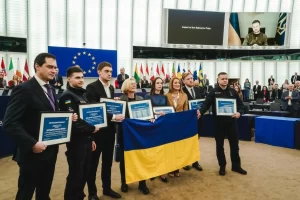
Parliament’s 2022 Sakharov Prize was awarded to the brave People of Ukraine, in a ceremony on 14 December.
They were represented by their president, elected leaders and civil society at the ceremony in Strasbourg.
Russia’s unprovoked war of aggression against Ukraine, launched in February 2022, is inflicting enormous costs on the Ukrainian people, who are fighting to protect their homes, sovereignty, independence and territorial integrity. Every day they are also battling for freedom, democracy, the rule of law and European values.
Awarding the prize, President Metsola spoke of the courage and sacrifices of the Ukrainian people: “The message from Europe has been clear: We stand with Ukraine. We will not look away. The Ukrainian people are not just fighting a war of independence but fighting a war of values. The values which underpin our life in the European Union and that we have long had the luxury of taking for granted each and every day.”
After asking for a minute of silence in the name of all the Ukrainian men, women, children, military and civilians who have been killed in the war, Ukrainian President Volodymyr Zelenskyy said:
“We must act now, not waiting for the war to end, to bring to justice all those who unleashed it and to prevent any repetition of aggression. This will be the most effective protection of freedom, human rights, the rule of law and other common values, which are embodied in particular by this award by the European Parliament.”
Speaking via video link, he called for support for an international tribunal to bring to justice for the crimes committed by Russia.
Present at the ceremony were:
• Oleksandra Matviychuk — human rights lawyer, chair of the Center for Civil Liberties organisation, which was one of the winners of the 2022 Nobel Peace Prize
• Yulia Pajevska — founder of the evacuation medical unit Angels of Taira
• Ivan Fedorov — the mayor of Melitopol
• Olekssandr Chekryhin and Stanislav Kulykivskyi — representing the State Emergency Services
• Yaroslav Bozhko of the Yellow Ribbon Civil Resistance Movement.
Find out more about this year’s nominees.
Find out how the EU is supporting Ukraine.
The European Parliament’s Sakharov Prize
The Sakharov Prize for Freedom of Thought is awarded annually by the European Parliament. It was set up in 1988 to honour individuals and organizations defending human rights and fundamental freedoms. It is named after the Soviet physicist and political dissident Andrei Sakharov and consists of a certificate and a €50,000 award.
In 2021, Parliament awarded the prize to Russian opposition leader Alexei Navalny.
Find out how the Sakharov Prize laureate is chosen in our infographic.
Sakharov Prize 2022: The brave people of Ukraine
Contacts:
• Viktor ALMQVIST
Press Officer
o (+32) 2 28 31834 (BXL)
o (+33) 3 881 72420 (STR)
o (+32) 470 88 29 42
o viktor.almqvist@europarl.europa.eu
o foreign-press@europarl.europa.eu
o @EP_HumanRights
o @EP_ForeignAff
• Eoghan WALSH
Press Officer
o (+32) 228 32591 (BXL)
o (+32) 485 399443
o eoghan.walsh@europarl.europa.eu
o deve-press@europarl.europa.eu
o @EP_Development
The 2022 Nobel Peace Prize laureates honoured at the ceremony in Oslo, Norway, on December 10, 2022
The ASF wishes to congratulate this year’s Nobel Peace Prize laureates and wish them further success in their noble endeavours.
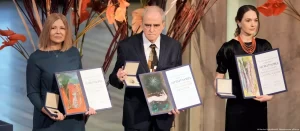
Natalia Pinchuk, the wife of imprisoned Ales Bialiatski, Yan Rachinsky, chairman of Memorial and Oleksandra Matviychuk, head of Ukraine’s Centre for Civil Liberties pose
This event, the first since pandemic lockdown, coincided with the UN’s Human Rights Day and highlighted the Russia’s war in Ukraine and the erosion of human rights in Russia and Belarus.
The co-winners of the Nobel Peace Prize include Memorial, one of the Russia’s oldest coalition for civil rights which was shut down by the government last year,
Ukraine’s Centre of Civil Liberties [CCL], and Belarusian activist Ales Bialiatski, the founder of the country’s Human Rights Centre Viasna (Spring) which was set up in 1996 in response to a brutal crackdown of street protests.
Ales Bialiatski previously spent three years in prison, he was released in 2014, then was put in prison without trial since July last year but never stopped the battle for justice.
Oleksandra Matviichuk, director of Ukraine’s CCL described him as “an extremely brave person”. Despite refusing to speak beside her Russian co-winner, Ms Matviichuk praised work with “our partner” Memorial, adding she had “huge respect for all [her] Russian human rights colleagues” who work in difficult conditions. Also, she warned that without proper accounting for the war crimes, peace would not come to Eastern Europe, and called for a new international tribunal.
Yan Rachinsky, the head of Memorial, said in the interview with BBC HARDtalk that his organization had been advised to decline the award, but ignored it. The mission of Memorial remained essential, it works without a legal entity and continues to document and publicize information about violation of human rights and defends the rights of victims, particularly among political prisoners and vulnerable contingent.
Announcing the prize winners, the Nobel Committee said that Memorial was founded on the idea that “confronting past crimes is essential in preventing new ones”. Mr Rachinsky called “remarkable” the decision to award the prize to recipients in three different countries. He said it was proof “that civil society is not divided by national borders, it is a single body working to solve common problems”.
In Memoriam of Mikhail Gorbachev (2 March 1931 – 30 August 2022)
On August 30, 2022, Mikhail Sergeyevich Gorbachev, the first (and last) President of the USSR, passed away at the age of 91. On behalf of the family of Andrei Sakharov and the Andrei Sakharov Foundation, I offer my deepest condolences to Mikhail Sergeyevich’s family.
Mikhail Gorbachev will always remain for me the man who single-handedly freed my grandfather, Andrei D. Sakharov, from a torturous exile that stifled his voice and sought to break him mentally and physically.
Millions around the world are saddened by the passing of a world-changing politician who gave the world hope for peace and mutual understanding, helping to overcome division and conflict.
Like Sakharov, Gorbachev was awarded the Nobel Peace Prize, becoming the second Russian laureate in the country’s history. (In 2021 Dmitry Muratov became the third Russian winner of the Nobel Peace Prize.)
Gorbachev made an incomparable contribution to the détente of international tensions. In 1987 Gorbachev and President Ronald Reagan signed an important Treaty on strategic nuclear weapons’ reduction. It was Mikhail Gorbachev’s sincerity, humanity and conviction that put an end to the decades of Cold War, pushed back the hands of the doomsday clock and gave hope to hundreds of millions of people for peaceful coexistence, freedom and democracy.
Gorbachev freed the last political prisoners in the USSR. He consistently pursued a policy of glasnost (openness). A “centrist” in conviction and character, Mikhail Gorbachev made every effort to find ground for national reconciliation, which can only ever be built on truthful and sincere reflection of history.
Moreover, Gorbachev not only talked but, in his actions, set positive examples for his people. True to his convictions, he left power voluntarily, although he could have easily used the levers at his disposal to retain power. But he did not want to disregard the will of the people and risk the bloodshed of his countrymen.
At the end of August 2022, a new book “Sakharov, Citizen of the Universe” was published, which opens with Gorbachev’s article on Andrei Sakharov. As fate would have it, that article about Sakharov was Gorbachev’s last published work during his lifetime.
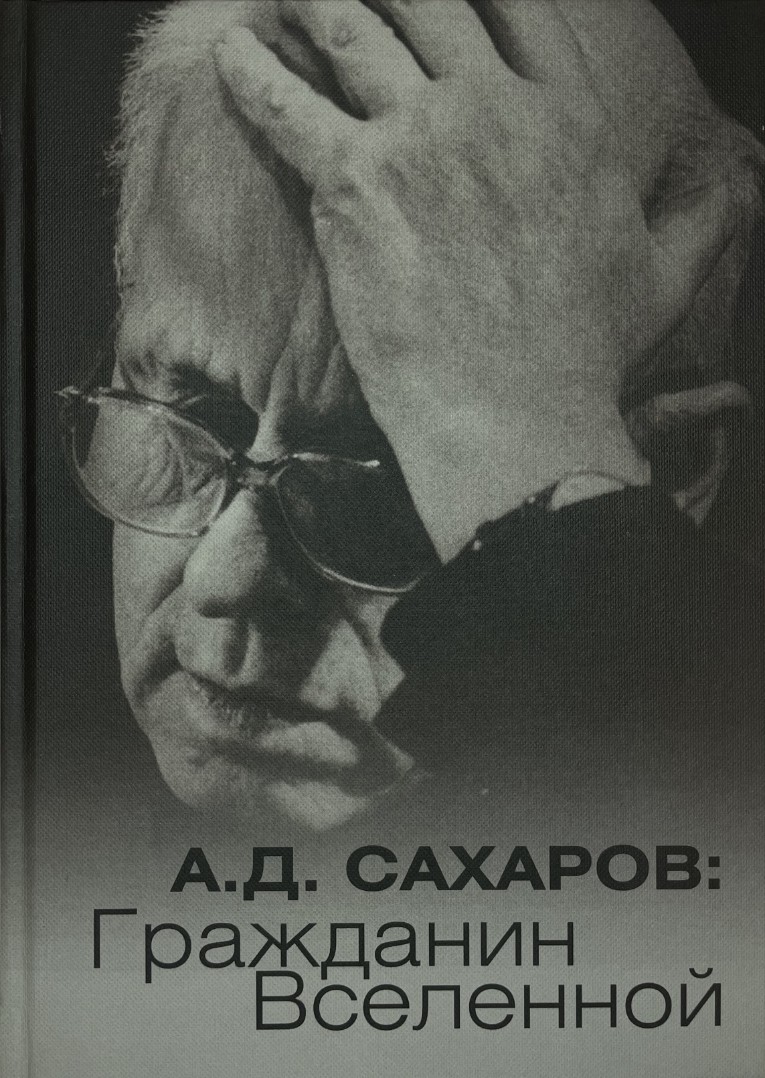
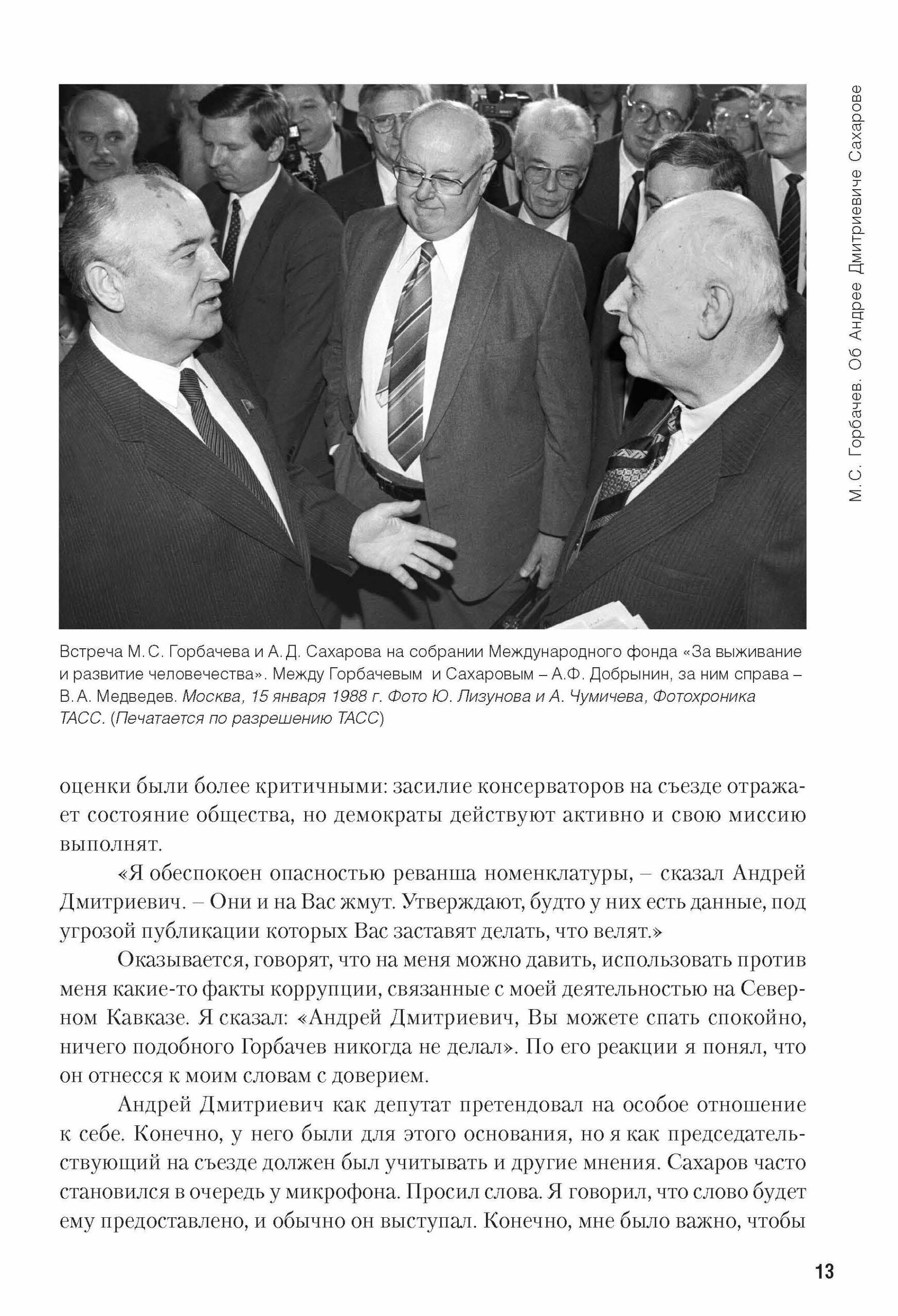
Yet for many Russians today, Gorbachev remains at best a “misunderstood prophet” (the title of a collection released for his 90th birthday in March 2021).
Nikita Petrov, the Russian historian at Memorial, wrote: “Gorbachev is gone. And curses are sent in his wake only by slaves who failed to take advantage of the freedom they were granted.”
Ruslan Grinberg, the Russian economist and friend of Gorbachev, similarly observed: “He gave us all freedom – but we didn’t know what to do with it.”
More will be written about Gorbachev in the coming days, months and years. I have no doubt that history will see him as the 20th century’s Abraham Lincoln, setting more people free than anyone of his generation.
Marina Sakharov-Liberman
Granddaughter of Andrei Sakharov
Today the ASF remembers an outstanding person and a dear friend to many of us, Sergei Adamovich Kovalev:
Sergei Kovalev (2.03.1930 – 9.08.2021)
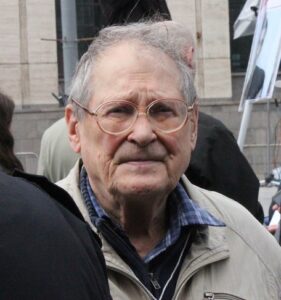
Human rights activist, biologist, board member of International Memorial (banned in Russia since January 2022).
August 9 marks a year without one of Russia’s greatest moral authorities. Sergei Kovalev, a close friend of Andrei Sakharov and his wife Elena Bonner, died one year ago, on August 9, 2021.
“A free Russia, without repression or arbitrary use of law” was Kovalev’s dream, to which he dedicated his entire life.
In the 1990s, at the time of the First Chechen War, Russian journalists demanded to know why Kovalev only focused on the human rights violations of Chechens, not on those of Russian people. “This is simply untrue,” came his reply.
In 2005, he was asked a similar question:
“Why do you so hate Russians and always speak in defense of those who hate Russians and fight against them? You keep defending Chechen bandits, Latvian fascists and Russophobes of all creeds.”
To that Kovalev responded:
“I never defended specifically Uzbeks, or Latvians, or Russians. I always defended those who needed defense. I follow the Declaration of Human Rights, which is very clear on the subject: regardless of gender, age, language, religion, or race.”
Kovalev added:
“You are mistaken to say that Russians were never an object of my human rights defense. We defended them – in the Baltics, and, indeed, in Budyonovsk. We fought for release of two thousand Russian hostages held at Budyonovsk hospital…”
Similar to Andrei Sakharov, Kovalev started out as a political activist in the 1960s, trying to force the Soviet authorities to adhere to the Soviet Constitution and other legal treaties, to which the Soviet Union was a signatory.
“This type of protest is far more ethically acceptable to me than undercover agitation and violence,” said Kovalev.
Since the 1960s, Kovalev was one of the editors of the Chronicle of Current Events that kept track of human rights violations in the USSR. Despite continuous blackmail and threats by the KGB, Kovalev felt it morally imperative to keep informing the world about human rights abuse in the Soviet Union.
Arrested in December 1974, Kovalev was tried in Vilnius a year later, charged with “anti-Soviet agitation.” On the very day in 1975 that the words of Sakharov’s Nobel lecture were galvanizing the audience in Oslo, Sakharov (who himself was banned from travelling to Oslo to accept his Nobel Peace Prize) was showing his support to Kovalev. He stood outside the courthouse in Vilnius where the Soviet authorities were doing their utmost to silence the unyielding Kovalev. So great was the fear of the brave man that Kovalev was even denied his last plea. Serving his sentence of seven years of hard labor and three years of exile, Kovalev returned to Moscow during Gorbachev’s Perestroika.
On Andrei Sakharov’s insistence, Kovalev ran and was elected deputy of the People’s Congress. Kovalev was one of the authors of the Russia’s human rights declaration and the first human rights’ ombudsman in Russia’s history. He served as Chair of the Human Rights Commission of the President’s office but following his sharp critique of Yeltsin’s “bloody and senseless” strategy in the Chechen war, he resigned from his post.
Already in early 2000, during the brief period of a caretaker government, Kovalev’s foresight led him to state that if Putin were to come to power, this would open a path to “an authoritarian, police state where the security services would be at the helm.”
In March 2010, Kovalev became one of the original 34 signatories of the public petition, “Putin must go,” alongside Elena Bonner, Boris Nemtsov, Garry Kasparov, Andrei Illarionov, Ilya Yashin and others.
In his interview in March 2020, Kovalev warned in the strongest terms of the dangers of criticizing Ukraine for its alleged fascist and banderovite tendencies. Kovalev did not live to see the descent of Russia into a senseless and bloody war, but he foresaw the risks with the utmost clarity. “Democracy is not the will of the people,” he said. “Democracy is freedom and right of minorities, including political minorities, to express their views and compete for the approval of the majority – without hindrance, honestly, openly. To compete with the political incumbents and other opponents.”
“Motherland is not a geographical term, nor is it an ideology,” stated the Yugoslav philosopher Mihajlo Mihajlov. “Motherland is freedom.” Ever a free spirit, Kovalev was an outstanding patriot of Russia, leaving his compatriots a priceless legacy.
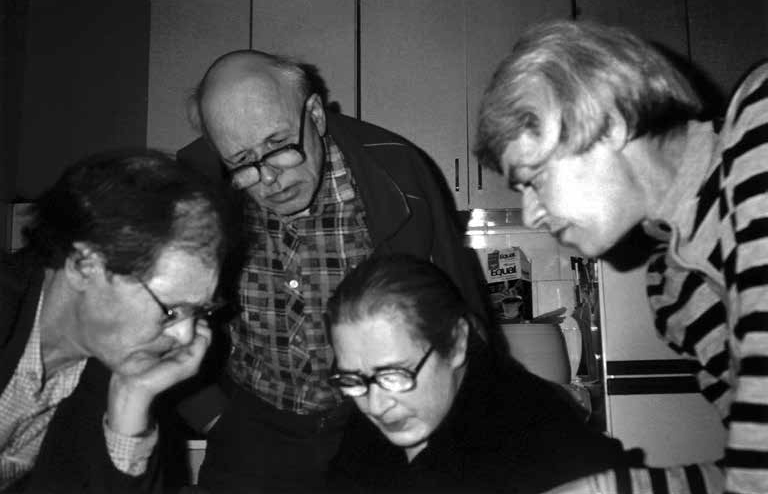
The book “Sakharov, a citizen of the universe”. Today to mark a year since Sergei Kovalev’s passing, we are publishing one of the book’s entries, written by him
The ASF supported a publication of a new volume of memoirs about Andrei Sakharov, which includes the articles by over 70 colleagues and friends. This book, entitled “Sakharov, a citizen of the universe”, will be published in Russian in September, followed by an English edition. Today to mark a year since Sergei Kovalev’s passing, we are publishing one of the book’s entries, written by him.
“Sakharov”. By Sergei A. Kovalev
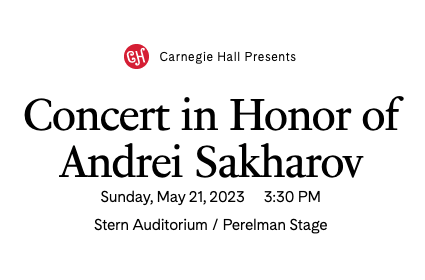
Concert in honor of Andrei Sakharov at Carnegie Hall, 21 May 2023
The Carnegie Hall published their new season program, which includes a concert organized by the ASF in honor of Andrei Sakharov.
“An astonishing lineup of internationally renowned musicians comes together to celebrate the centenary of Andrei Sakharov — physicist, humanist, and Nobel Peace Prize winner for championing universal human rights, disarmament, and peace, in whose name the European Union established the Sakharov Prize for Freedom of Thought.”
The ASF is immeasurably grateful to our amazing artists for their generosity:
Gidon Kremer, Violin
Maxim Vengerov, Violin
Steven Isserlis, Cello
Evgeny Kissin, Piano
Lera Auerbach, Piano
Emerson String Quartet
– Philip Setzer, Violin
– Lawrence Dutton, Viola
– Paul Watkins, Cello
We are also very thankful to Sir Clive Gillinson, Ms Ann Weber and the entire team at Carnegie Hall for their outstanding professionalism and great support they’ve given us.