
In memoriam:
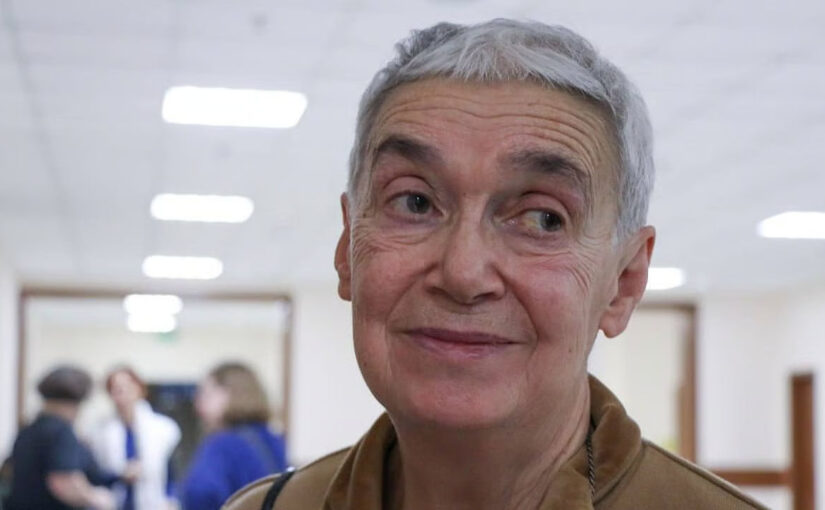
Nina M Litvinova (August 9, 1945 – May 12, 2026)
a prominent ocean researcher and lifelong dissident
My angel, my sister Nina, is gone.
This was one short sentence, in which Pavel Litvinov, 84-year-old Nina’s older brother, poured out his heart. His younger sister, intelligent, beautiful, with limitless empathy, a human rights activist who had been helping political prisoners since the 1960s, had left the world. Nina Litvinova, a prominent ocean researcher and lifelong dissident, took her own life at 80. Her body was found on Wednesday on a street in central Moscow.
A moment of profound grief settled over the small surviving community of Russian liberals and anti-war activists, many of them now in exile.
Her note said life had become “unbearable” since the full-scale invasion of Ukraine. “I tried to help them, but I’m exhausted, and I suffer day and night from helplessness,” she wrote of those jailed for opposing the war. “I’m ashamed, but I gave up. Please forgive me.”
Memorial published an obituary describing her as a participant in the dissident movement who had spent decades supporting political prisoners. She attended the trials of historian Yuri Dmitriev and hearings in the cases of Oleg Orlov (now free in Berlin) and Zhenya Berkovich. “She was always there where the pain was greatest,” the obituary reads.
Her brother Pavel is the famous dissident — he was among the eight protesters who staged a rare demonstration on Red Square in 1968 against the Soviet invasion of Czechoslovakia, for which he was sentenced to five years of internal exile. He emigrated to the United States in 1974 and now lives in New York at age 84.
For all the tragedy, most Russians who find themselves in the hermetically sealed information environment of today’s Russia, will encounter this story, if at all, filtered through state media’s depoliticized framing — an old woman’s death, a family connection to Soviet history. Her grandfather, Maksim Litvinov, had served as Soviet foreign minister until Stalin dismissed him in 1939 — partly, it is widely believed, so as not to antagonize Hitler with a Jewish face at the head of Soviet diplomacy.
She wrote that she was ashamed, that she gave up. She did not give up. She bore witness to the suffering of others for six decades, and when words failed, she made her death a final, unanswerable act of conscience. Nina Litvinova’s life will outlast the regime that made her despair necessary.
The ASF offers its deepest condolences to Pavel Litvinov, Maria Slonim, Lara Litvinov, and other close family members.