

The Russian word поступок — rendered here as “act of conscience” — carries a weight that resists easy translation. It means not merely an action, but a deliberate, principled deed taken at personal cost; a choice that defines character. It is precisely the right word for what Andrei Sakharov embodied throughout his life: the willingness to act on conscience regardless of consequence. And it is the right word for what independent journalism, at its best, demands.ÏSakharov understood that authoritarianism does not only suppress dissent — it corrupts the information environment on which any society depends to correct its errors. A regime that controls what citizens know about their own country, their own war, their own leaders, becomes incapable of self-correction. The role of the honest journalist in such a system is not merely professional — it is civic, moral, and in the deepest sense political. Free journalism is not a luxury of open societies; it is one of the essential defences against their closure. Without it, the space for dissent shrinks, accountability disappears, and the conditions for authoritarian consolidation fall quietly into place. The history of the 20th century offers no shortage of evidence for this. The history of the 21st is beginning to add its own.
It was in this spirit that an annual prize bearing Sakharov’s name — За журналистику как поступок, Journalism as an Act of Conscience — was established in Russia, first awarded around 2001-2002 and formally endowed with the blessing of Elena Bonner. Administered by the Glasnost Defence Foundation in Moscow, it was awarded each year on 10th December, International Human Rights Day. The jury at various points included Nobel Prize-winning Belarusian author Svetlana Alexievich and the popular Russian writer Vladimir Voinovich, then based in Munich. The panel of judges was later headed by the world chess champion Garry Kasparov. The prize recognised both investigative journalism and opinion writing — work that bore witness, named names, and accepted the risks that came with doing so.
Among its laureates were Anna Politkovskaya, the Novaya Gazeta correspondent murdered in Moscow in 2006 for her reporting on Chechnya; Mikhail Khodorkovsky, recognised for articles published from prison in Novaya Gazeta; Zoya Svetova; Boris Vishnevsky; Dmitry Glukhovsky; Radio Svoboda, and Ukrainian outlets including the newspaper Den, Krym.Realii, and Ukrainska Pravda. The list of thirty-three laureates reflects both the breadth of the prize’s reach and the deteriorating conditions for independent journalism in Russia over the period it ran.
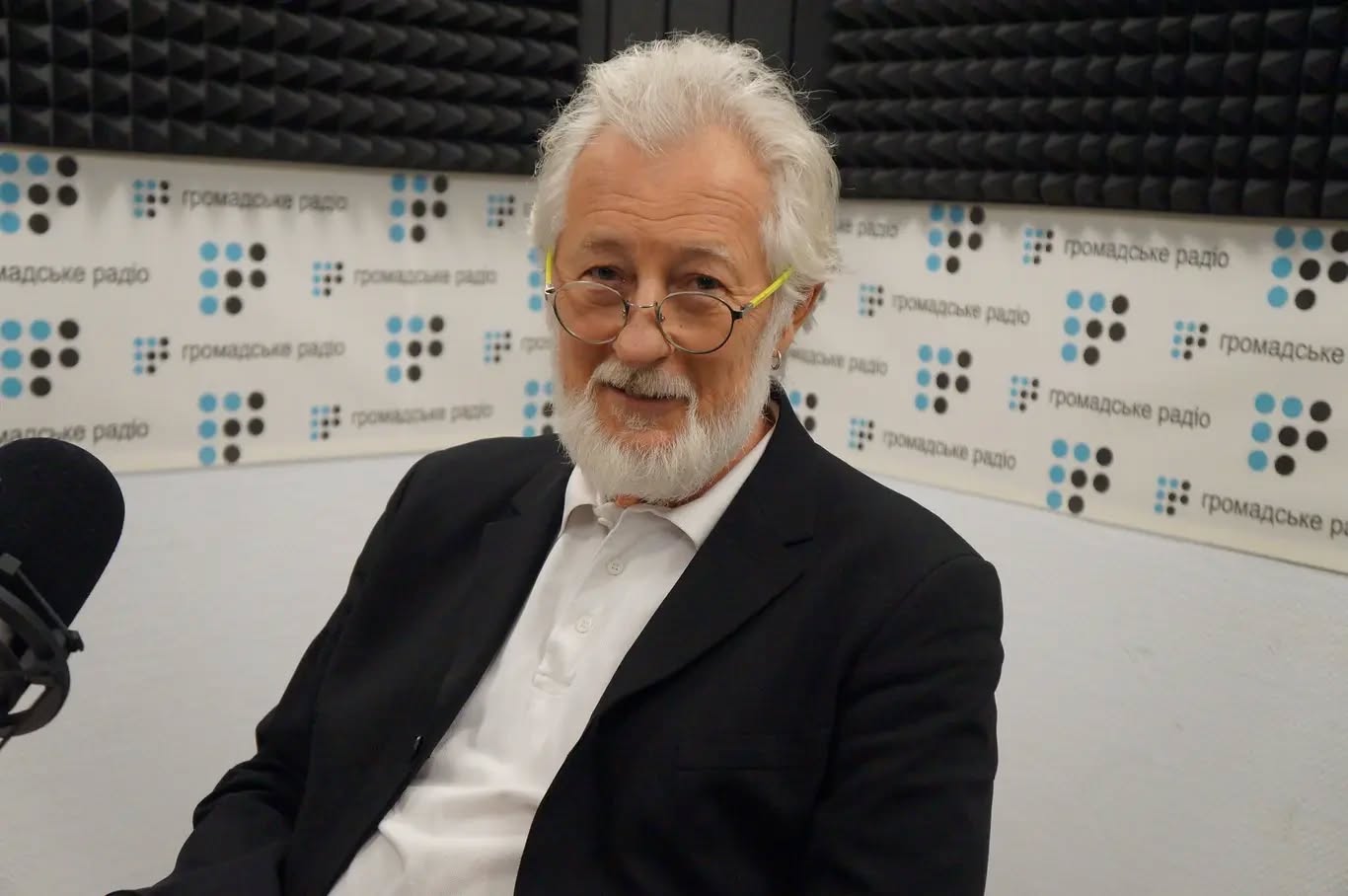
The prize was funded throughout by Pyotr (Peter) Vins — a man whose own biography reads like a condensed history of Soviet repression and its long aftermath. His grandfather, an American Protestant minister, emigrated to the Soviet Union to preach and died in the Gulag. His father, also a minister, was imprisoned in the 1970s; Andrei Sakharov publicly supported him. Peter himself became a dissident and a member of the Ukrainian Helsinki Group. His father was eventually exchanged for a Soviet spy and expelled to the United States; Peter followed. Returning to Russia in the 1990s, he built a transportation business and in 2001-2002 established the journalism prize as a personal tribute to Sakharov, funding it until 2018. In 2010, a criminal investigation for tax evasion — which Elena Bonner publicly declared politically motivated — forced him to leave Russia again. He moved to Kyiv, remaining there until Russia’s full-scale invasion of Ukraine in 2022, after which he resettled in the United States. As recently as 2024, he was reported to be helping refugees through Catholic Charities in Oregon — a quiet final chapter consistent with a life spent in service to others.