
“Lavrentiy Pavlovich, why are we always in the position of catching up? Why can’t we move ahead ourselves instead of copying Western models?”
This was a daring question that Andrei Sakharov posed to Lavrentiy Beria in the early 1950s. Beria, the feared head of the secret police, had been appointed by Stalin to lead Department S, which was tasked with developing nuclear weapons for the Soviet Union. His reply was blunt, essentially suggesting that a market-based approach in a free country produced superior results.
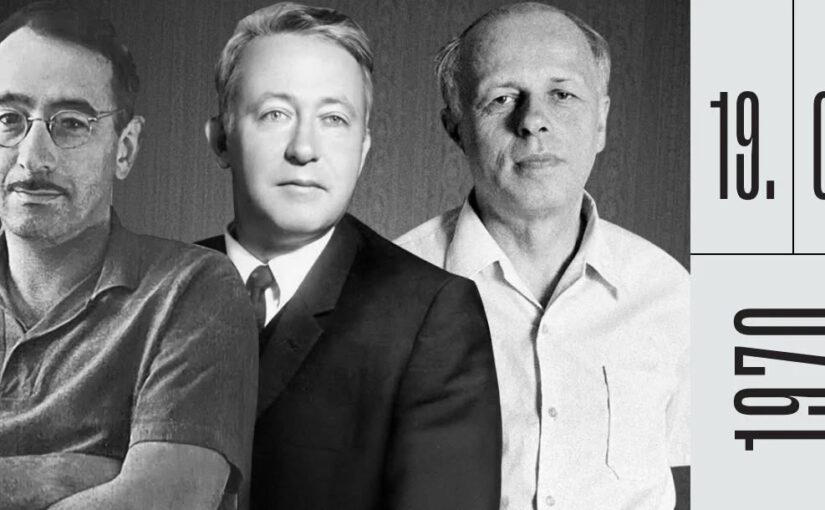
Twenty years later, Andrei Sakharov, together with fellow physicist Valentin Turchin and historian Roy Medvedev, felt compelled to continue this discussion with Leonid Brezhnev and the Soviet leadership. In their “Letter of the Three,” they called for a free and open debate on the democratization of the Soviet Union. Academic rather than polemical in tone, the letter proposed a 14-point program of reforms, including the release of all prisoners of conscience, increased investment in education and the environment, judicial reform, and free elections. They warned that without democratization, the USSR would fall further behind in technological progress, education, and healthcare.
The Soviet authorities responded predictably: with harassment and searches. Medvedev was dismissed from his position, and Turchin was forced into exile abroad. Eventually, Sakharov himself was sent into internal exile in the city of Gorky.
Gorbachev’s perestroika finally arrived in 1985, echoing the gradual democratization proposed by Sakharov and his colleagues some 15 years earlier. Arguably, it came too late. By then, the USSR was on the brink of bankruptcy, with its republics already pushing for independence.
* From left to right: Turchin, Medvedev, Sakharov. The illustration is taken from the Moskvich mag.