
… The division of mankind threatens it with destruction.
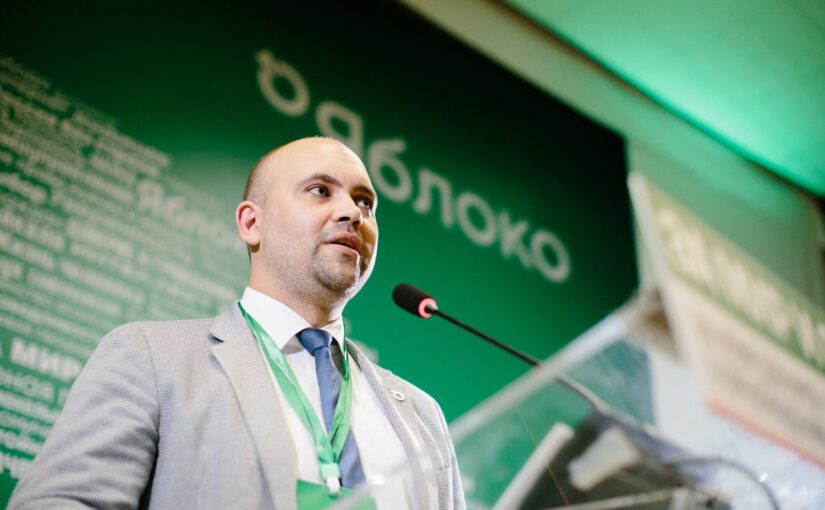
A Chelyabinsk court cited this Sakharov’s quotation — bundled together with an image from a Banksy mural and a line from Soviet diplomat Andrei Gromyko about the virtues of negotiation over war — as grounds for a copyright complaint against Yaroslav Shcherbakov, the regional leader of the Yabloko party, striking him from the ballot for September’s State Duma elections. It was, in fact, the second time in a month that the authorities had removed him: weeks earlier, Russia’s Supreme Court had already struck down the federal party list that Shcherbakov himself had led, on similarly technical grounds.
Yabloko is one of Russia’s oldest political parties, its ranks filled over the decades with former dissidents and human rights activists. For years, Putin’s regime tolerated it as a useful outlet for political mockery — a party permitted just enough space to prove that dissent existed and that it didn’t matter. Its best result came in 1993, when it won 7.8% of the vote; support declined steadily after, and it has held no federal Duma seats since 2007.
This year looked different. Running under the slogan “For Peace and Freedom!” — the only registered party in the race with an openly antiwar platform — Yabloko saw its support climb sharply within days of launching its campaign. Reported closed-door polling put its rating as high as 9 – 10%, nearly double the 5% threshold for parliamentary representation. Videos in support of the party circulated widely on TikTok and Instagram, and endorsements arrived from unexpected quarters, including from activists in Alexei Navalny’s Anti-Corruption Foundation. It was not a fringe curiosity; it was a real and rapid consolidation of protest votes behind the one party willing to say plainly that the war should end.
That, evidently, was the problem. Having barred Yabloko from the federal ballot altogether, the regime turned to harassing and disqualifying the party’s remaining candidates in single-mandate constituencies on similarly manufactured grounds — Shcherbakov, a 38-year-old lawyer, among them. What his case makes plain is not merely that Sakharov’s words remain dangerous in today’s Russia, but that a genuine hunger for peace, wherever it surfaces on a ballot, is treated by the Kremlin as a threat to be dismantled with the same bureaucratic apparatus once trained on the dissidents of Sakharov’s own generation.